Reasons Why Jasmine Grows Slowly and Fails to Bloom, and How to Fix It
Jasmine is a flowering plant with elegant yet very fresh and natural blooms, and it is also a well-known ornamental plant that is very suitable for growing in pots for enjoyment. So how do you grow jasmine that is lush with flowers and leaves? Today, the editor will explore this together with you.
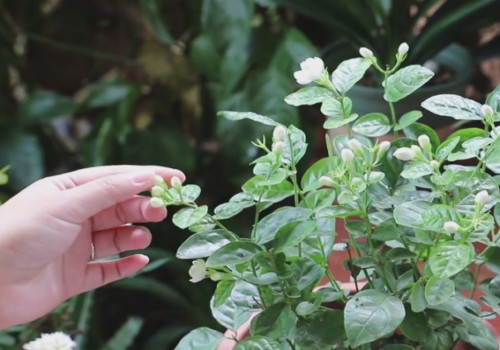
When we grow jasmine as a household potted plant, if it grows slowly and fails to bloom, it is bound to make us feel somewhat regretful and frustrated. However, this is likely either a problem with the plant's growing environment or the result of improper care and management on our part. So what should we do when jasmine grows slowly and does not bloom?
Practice has proven that if jasmine shows slow growth and does not bloom for a long time, this is usually closely related to light and to water and fertilizer management. Since jasmine greatly prefers a growing environment with ample light, when light is lacking it will not only grow slowly but also delay blooming indefinitely.
Moreover, different placement locations generally allow different lengths of light exposure. This often requires us to calculate carefully during our daily care and management, since jasmine is a sun-loving flower. As long as it is not placed under the scorching sun in summer, it can generally be given a full-sun environment with ample light.
Of course, jasmine also requires careful judgment in watering management, because prolonged light exposure can accelerate water transpiration; if watering is not timely, it may cause the plant to become dehydrated. This will make the plant grow more and more slowly, and it will certainly not bloom, because both growth and flowering consume a considerable amount of water.
Therefore, we need to replenish water in time, but in hot weather do not water at midday, to avoid water evaporating too quickly; in low temperatures, the opposite generally applies, and watering should be done at midday to avoid reducing the plant's cold resistance. This is mainly reflected in the two seasons of summer and winter. Because temperatures differ, watering methods also differ greatly.
In addition, during the plant's growing period and flowering period, a large amount of nitrogen, phosphorus, potassium and calcium elements usually needs to be supplied to replenish nutrients. After all, for jasmine to maintain rapid growth and blooming, it not only consumes more water than usual but also consumes more nutrients. So during these two growth stages of jasmine, sufficient nutrients must be supplied. When nutrients are insufficient, the plant not only grows slowly but also fails to bloom, and may even show various other poor growth symptoms.
With suitable light and temperature and sufficient water and fertilizer, potted jasmine not only grows more rapidly but also blooms smoothly on schedule, with more and more beautiful flowers, white blooms and green leaves interwoven; though elegant, it can bring a feeling of refinement, purity and freshness. To promote blooming, we can also use a little vitamin B12, dissolving it in water to make acidic water.
Generally, take 2-4 B12 vitamin tablets, grind them into powder, then dilute with water at a ratio of 1:1000, shake well and pour it into the potting soil; this can help regulate soil acidity and thus better promote plant growth. While accelerating plant growth, it can also effectively promote flowering; it not only improves the plant's immunity but also helps avoid root rot.