Care and Management Methods for Roses After Grafting Success
Roses can be grafted to cultivate multiple superior varieties on the same rootstock, generally using rose (Rosa multiflora) as the rootstock. There are also many grafting methods, such as cut grafting, bud grafting, root grafting, and so on, and good results are often achieved after grafting. However, after the grafted rose seedlings survive, care and management work is very critical. So, how should grafted roses be cared for and managed after they survive?
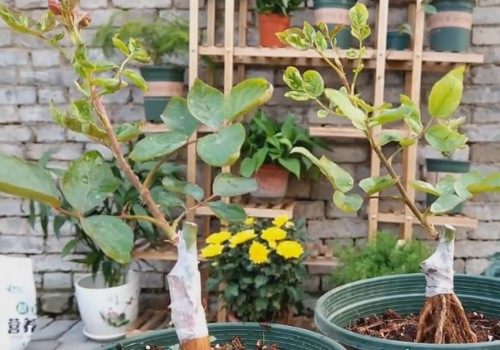
1. Pinch the tips promptly to avoid excessive vegetative growth or premature flowering
If the grafted seedlings are allowed to bloom prematurely, the nutrients of the entire plant will soon be exhausted, so generally when the grafted seedlings have grown more than 5-6 leaves, you can choose to keep 4-5 large leaves. Then pinch or top the grafted seedlings to prevent excessive vegetative growth or premature flowering from consuming too many nutrients.
After pinching the tips, the leaves remaining on the grafted seedlings will continuously carry out photosynthesis to produce energy, and the more energy and nutrients accumulate, the stronger the plant's root system will grow. Therefore, promptly topping the grafted rose seedlings is very beneficial for the development and growth of the plant's root system.
2. Apply timely topdressing, mainly with water-soluble fertilizers
If we fertilize the grafted seedlings at this time, it is generally not recommended to use compound fertilizer, because compound fertilizer is not easy to control well, and a slight mistake may cause fertilizer damage and burn the grafted seedlings. At this time, it is advisable to apply highly water-soluble fertilizers, and a mix of 2 types is recommended:
One is ordinary water-soluble fertilizer, diluted with water at 1:1000 and poured for irrigation. This kind of water-soluble fertilizer not only contains abundant nitrogen, phosphorus, and potassium elements, but also contains many medium and trace elements, which can inhibit or reduce yellowing leaves.
The other is beneficial microbial fertilizer, then diluted with water in an appropriate ratio and poured onto the grafted rose seedlings, especially when applied in a potted environment, it is very safe and healthy. Moreover, it is not easy to cause root nodule disease in the plant, nor is it easy to breed various harmful pathogens, and it can effectively inhibit the growth of harmful microorganisms.
Of course, if economic considerations are not an issue, we can also go to the flower market to buy specialized water-soluble fertilizer and apply it, and the effect is equally good. After all, when many flower enthusiasts mix their own water-soluble fertilizer, they often cannot accurately determine the ratio, and situations of unreasonable ratios easily occur.
In summary, after roses are grafted, on the one hand they need timely topping, and on the other hand they need timely topdressing with water-soluble fertilizer. Through such management, the plant not only grows well, but also grows stably. Of course, if necessary, we can also set up support for the plant, otherwise the graft union may be broken by the wind, thereby bringing us unnecessary losses.