Why do camellias have flower buds but fail to bloom?
Camellias not only have dark green leaves, but their flower shapes are also very beautiful and gorgeous, making them a flowering plant very suitable for pot cultivation. Although camellias are beautiful, they are sometimes not that easy to grow well, especially when you want them to bloom smoothly on schedule, which often requires a lot of effort.
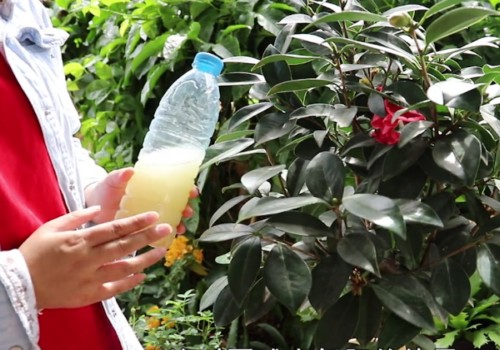
When growing camellias in pots, the biggest difficulty is getting them to produce high-quality flowers. Sometimes, even when you clearly see that the plant has grown quite a few flower buds, in the end you still cannot see their beautiful blooms. So why do camellias have flower buds but fail to bloom?
1. Apply less nitrogen fertilizer
Winter and spring are the periods when camellias form buds and bloom, so their nutrient demand is relatively high. Many growers therefore apply a lot of additional fertilizer, while overlooking what the chosen fertilizer should focus on. When applying additional fertilizer at this time, the intake of nitrogen should be reduced. Otherwise, it not only easily causes nitrogen excess, but also easily makes the plant grow rampant foliage and branches, thereby affecting flower bud differentiation and bud formation, and ultimately leading to the phenomenon of only growing flower buds without blooming.
In this case, it is not that we do not need to apply additional fertilizer, but that we need to control the proportion of nitrogen fertilizer and mainly apply phosphorus and potassium fertilizers, such as fish bone meal, eggshells and similar materials, or apply some organic fertilizer. All of these can promote bud formation and avoid excessive vegetative growth.
2. Control watering
Because the camellia's bud formation period falls in winter, when temperatures are relatively low, water evaporation is relatively small, so watering cannot be done the same way as in other seasons and must be controlled in time. Otherwise, too much watering can easily cause water accumulation in the pot, leading to mold and even rot in the camellia's root system.
Moreover, if the camellia is in the bud formation period, the original potting soil should be kept slightly on the dry side, as this is more conducive to the development and maturation of the plant's flower buds. In this case, generally keeping to watering once every 2-3 days is enough. This will not be excessive, and the potting soil moisture will also be suitable.
3. Thin the buds in time
Many growers hope that their potted camellias will be covered with flower buds all over the tree, thinking that the more buds there are, the more flowers will bloom and the better it will look. In fact, this is a misunderstanding. Because when there are many flower buds, nutrient consumption is greater, and nutritional competition is easily formed. This not only easily weakens the tree's vigor, but also causes some flower buds to develop poorly, so the blooming result can be imagined.
At this time, we should not only avoid letting the camellia be covered with flower buds all over the tree, but also need to control their number to reduce nutrient consumption and avoid nutritional competition. Therefore, bud thinning is a very necessary measure to take. Generally, it is enough to keep 1-2 flower buds on each flowering branch, and all the other weaker-growing flower buds need to be thinned out. The retained flower buds will then obtain more nutrients to promote blooming, so the phenomenon of camellias only growing flower buds without blooming will not occur.