How to care for camellias in winter? A detailed guide to growing methods
Camellia is a delicate, beautiful and highly ornamental flowering plant, so it is deeply loved and sought after by many gardening enthusiasts. However, when growing camellias in winter, since they need to form buds and bloom during this period, we need to prepare enough nutrients for them.
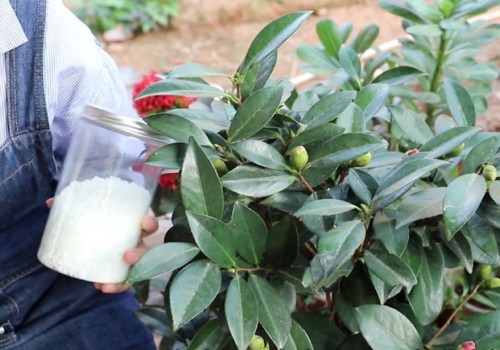
However, even though many enthusiasts fertilize as required, the plant's growth does not seem to be that good. Why is that? Today, we will analyze the reasons and tell you the growing methods for camellias in winter.
1. Increase light exposure
Because the winter climate differs greatly between northern and southern regions of China, camellias also show certain differences in growth. For enthusiasts in northern regions, during the care period they often need more sufficient light than those in southern regions. Light can effectively increase photosynthesis, forming the nutrients needed for plant growth, thereby promoting the formation and differentiation of flower buds.
2. Supplement with phosphorus fertilizer
For a plant to grow well, it needs sufficient nutrients, especially for a plant like camellia that blooms in winter and spring, which needs even more adequate nutrition to ensure it can bloom smoothly. To promote camellia blooming, it is usually best to apply phosphorus and potassium fertilizer, and applying it as a foliar spray gives better results.
After comparison, monopotassium phosphate is a relatively good foliar fertilizer, and its method of use is also very simple. But the concentration must be controlled well, usually 0.2% is appropriate. Fully dissolve monopotassium phosphate in water, shake well, and then spray it on the leaf surface. Of course, the entire plant should be thoroughly sprayed, especially the front and back of the leaves, which should be sprayed evenly.
Of course, the timing of foliar fertilizer spraying must also be well controlled. Since this is winter topdressing, the influence of temperature must be considered, otherwise it will not only fail to supplement nutrients, but may even damage the plant. Try to choose the period with the highest temperature during the day, as the leaves will absorb nutrients better this way. Generally, spraying once a week is enough. If there is leftover fertilizer water after spraying, it can also be used to water the roots.
In winter, to make camellias grow better and the buds fuller and stronger, we might as well manage them from these two aspects. After all, winter light and nutrition are too important for the growth and blooming of camellias. As long as these two conditions are met, it becomes very simple for camellias to bloom on schedule.