How to rescue a hydroponic peace lily with root rot? A few treatment methods to teach you
Growing a potted peace lily offers very high ornamental value, especially when it blooms, with the white flowers and green leaves setting each other off, it is simply beautiful! Moreover, the peace lily can not only be grown in soil in a flower pot, but can also be grown hydroponically; as long as the care method is appropriate, it can likewise be grown with white flowers and green leaves.
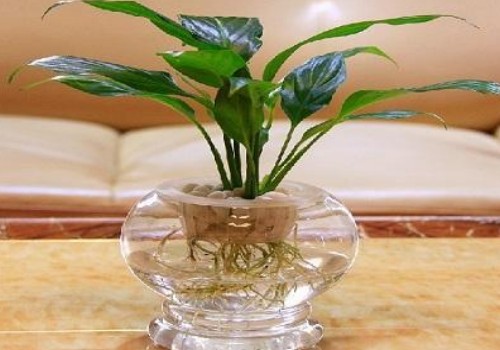
However, many people assume that a hydroponic peace lily will not develop root rot. In fact, this is not the case; whether grown in soil or hydroponically, the problem a peace lily is most prone to is root rot. For soil culture, the most common cause of peace lily root rot is excessive watering. Since water usually contains green algae or other bacteria, these substances can easily inhibit or affect the normal growth of its root system, and root rot then occurs.
If grown hydroponically, it will likewise face this problem. It is just that root rot in a hydroponic peace lily is often caused by the water environment being damaged due to infrequent water changes, or by pathogenic infection resulting from not cleaning the contaminants on the inner wall of the container each time the water is changed.
For a hydroponic peace lily, its root system is itself soaked in water for a long time, and at a glance it is easy to distinguish old roots from new roots. But if the roots of a hydroponic peace lily develop wounds, we should as far as possible not use nutrient solution during care, so as to avoid changes in water quality that lead to root rot.
Of course, if the hydroponic container is not clean, especially if a large amount of bacteria has bred on the inner wall of the container, it will also cause root rot in the hydroponic peace lily. So, each time you change the water for a hydroponic peace lily, it is recommended to use a potassium permanganate solution to sterilise and disinfect the inside of the container, or to scald the inner wall of the container with boiling water.
In ordinary care, besides changing the water frequently, the original creator also needs to frequently clean the residue on the inner wall of the container. This is because such residue often carries a large amount of pathogens, and over time it very easily comes into contact with the peace lily's roots, thereby triggering root rot. So, for a hydroponic peace lily, you must usually ensure the water quality inside the container is clean. As long as the roots are intact and without wounds, you can drip a few drops of nutrient solution into the water each time you change it to promote its growth. So, how do you rescue a hydroponic peace lily with root rot?
First we need to take the plant out of the container, promptly cut off the rotted root parts, and if necessary the roots can also be soaked in a carbendazim solution. Then prepare a new container and fill it with clean water, and then reinsert the peace lily, whose roots have been trimmed and slightly dried, into the container to continue hydroponic culture.
But if the root rot has caused the lower old leaves of the peace lily to dry up and wilt, it is recommended to cut off the "problem" old leaves at the very bottom of the plant, as this can reduce the burden on the plant's roots and thereby promote the sprouting and growth of new roots. Then we continue hydroponic culture according to the correct care method.
If we do not have a spare container and need to use the original container to continue growing the peace lily, then before using it we first need to pour out the damaged water in the container, then clean off the contaminants on the inner wall of the container, then use a potassium permanganate solution to wash the inner wall of the container, or directly scald it in boiling water to thoroughly sterilise and disinfect it. Then simply use it again to grow the peace lily hydroponically.