Reasons Why Potted Jasmine Doesn't Bloom and How to Fix It
In many people's eyes, jasmine can be called a “blooming machine,” which shows that its flowering period is long enough. In fact, jasmine can bloom from May to November every year. What many don't realize is that jasmine blooms from new flowering branches, one flush after another, and it is precisely for this reason that its flowering period is so long.
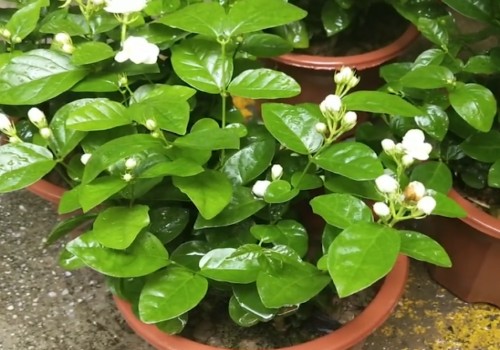
Although jasmine has a long flowering period and produces numerous flowers, making it a plant that blooms relatively easily, some growers still encounter the phenomenon of their potted jasmine not blooming. Considering that jasmine needs sufficient nutrients to bloom, they use enough phosphorus and potassium fertilizer and take great care with maintenance, yet the plant still fails to bloom, which is truly distressing and puzzling.
In fact, meeting conditions such as a bright environment, good ventilation, suitable temperature, and sufficient water and fertilizer are often necessary guarantees for blooming, but they do not mean the jasmine will definitely bloom. So what should you do if your potted jasmine doesn't bloom? If all these conditions are met and the jasmine still doesn't bloom, then we have to consider two other factors.
1. Pay Attention to Pruning
The jasmine plant has strong sprouting ability and grows very luxuriantly during the peak growing season. If we neglect pruning in our care and management, it may lead to a phenomenon of only growing branches and leaves without blooming. But even when pruning, it cannot be done blindly; it needs to be carried out according to scientific methods. In principle, count down 2 pairs of leaves from the flower receptacle, then cut off the upper part.
But pruning is not limited to this. You also need to cut off old, weak, diseased, and pest-damaged branches, leggy branches, and dead branches and fallen leaves. This not only saves some nutrients but also stimulates the plant to sprout better. Although a few weak or leggy branches may still form a small number of flower buds, they have limited access to nutrients and are therefore unlikely to bloom. Even if they do bloom sparsely, the quality is not high. Therefore, they need to be cut off in time.
2. Increase Light Exposure
Jasmine enters its peak flowering period in midsummer because it likes a growing environment with high temperatures and ample light. But at the same time, it cannot tolerate prolonged exposure to the scorching sun, so many growers move it directly indoors to a cool place in summer, resulting in insufficient light that causes the plant to grow leggy branches and leaves without blooming.
In fact, even in midsummer, we still need to provide it with sufficient light. Although we should try not to let it be exposed to the scorching sun for long periods, we can place it under the shade of a large tree, or move it to an open balcony where appropriate shading is enough. But we must ensure it can fully receive scattered light, which is very important for its blooming.
If you encounter the situation described today, then when other care conditions are met, on the one hand we need to improve the conditions for it to receive light, and on the other hand we need to combine this with pruning for care. Besides reducing nutrient consumption, pruning can also improve the ventilation and light penetration of the potted plant, allowing the plant to carry out photosynthesis better, thereby promoting growth and ultimately achieving a pot full of blooms.