Reasons and Solutions for Jasmine Blooming Less or Not Blooming at All
The jasmine plant gives people the impression of green leaves and white flowers, accompanied by a faint fresh fragrance. Jasmine has a particularly long flowering period, from late spring and early summer to late autumn and early winter, its blooming figure can often be seen. But if we care for it well, we can even achieve blooming in all four seasons.
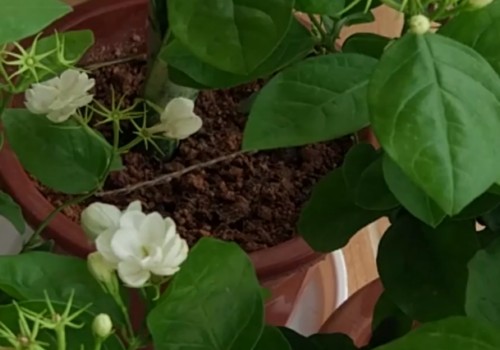
However, getting jasmine to bloom in the cold winter is quite difficult, after all, jasmine has poor cold tolerance. In winter, the ambient temperature needs to be kept above 12°C for jasmine to have any hope of blooming. But when you think about how jasmine not only brings us a touch of coolness in the hot summer, but also has the potential to bring us a feeling of warmth in winter, all the effort is still worth it.
Usually, jasmine can only fully demonstrate its value and charm during the flowering period. If we encounter a situation where it blooms little or not at all, it will inevitably affect the demonstration of its application value. Therefore, we need to promptly investigate the reasons for its sparse or absent blooming, and then scientifically adjust our care and management methods to ensure the plant can smoothly produce flowers that satisfy us. So, what should we do when jasmine blooms little or not at all?
Actually, when we encounter the phenomenon of jasmine blooming little or only growing branches and leaves without blooming, everyone should not be anxious or blindly adjust care and management methods, otherwise it may not only fail to help improve blooming, but may even trigger new growth problems. Today, the editor will share a method with everyone that can not only make jasmine bloom more, but also make the floral fragrance more intense and the leaf color more oily green.
This method is to apply a little monopotassium phosphate and vinegar to jasmine at the right time. Monopotassium phosphate is rich in phosphorus and potassium elements, which are the two most important nutrient elements for promoting plant blooming. Vinegar is acidic, and jasmine is an acid-loving flowering plant, so it can effectively promote its growth and blooming.
Many gardening friends often use garden soil and tap water to grow jasmine for convenience, but garden soil tends to become compacted after being used for a long time, and its own permeability is also relatively poor. Combined with occasionally watering with tap water, which contains bleaching powder used for disinfection, it easily aggravates the degree of soil compaction and affects the infiltration of fertilizer and water. At the same time, it also makes the potting soil tend toward alkalinity, which naturally cannot allow the acid-loving jasmine to grow healthily.
And when we use monopotassium phosphate, it can play a role in promoting jasmine blooming, after all, plant blooming requires phosphorus and potassium fertilizer, especially potassium fertilizer plays a key role. Moreover, taking a little vinegar and mixing it into a vinegar water solution to irrigate the potting soil can improve the soil quality, making the potting soil tend toward acidity, thereby making the soil more suitable for jasmine growth.
Because jasmine blooming little or not at all is usually caused by soil tending toward alkalinity or lack of fertilizer, and by applying monopotassium phosphate and irrigating with vinegar water solution, these two problems can be well solved. So, jasmine will naturally tend to show the effects of more blooms, intense fragrance, and green leaves.