Why jasmine only grows leaves and does not bloom, and how to solve it
Jasmine is an evergreen shrub, deeply loved by people for its pure and elegant white flowers and its rich fragrance. For people who have long lived in the noisy city, placing a pot of jasmine on the balcony at home is both fresh and pleasing to the eye. However, to grow potted jasmine well, we still need to master the basic methods.
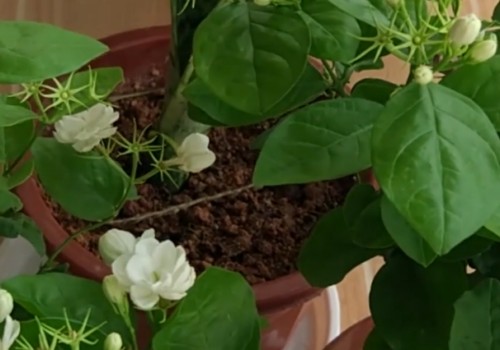
The flowering period of jasmine is very long, and it can even bloom in all four seasons, while its natural flowering period is usually in midsummer. Just imagine, in the hot and stuffy summer, a stretch of lush greenery appearing before your eyes and fragrance filling the room will surely soothe our fretful mood and bring us a touch of freshness and comfort.
But some gardening friends encounter this situation while growing jasmine: when the flowering period arrives, they only see the plant growing branches and green leaves, yet it never blooms, or the number of flowers is very small and the quality is not high. What can be done about this? To help everyone solve the problem of jasmine not blooming, the editor has some tips to offer.
In fact, the phenomenon of jasmine only growing branches and leaves without blooming is mainly caused by an unsuitable growing environment for the plant, and it may mainly be due to a lack of the nutrients needed for flowering. In this case, we might as well feed the jasmine a little monopotassium phosphate and vinegar, and the situation will be very different. Why is that?
First, monopotassium phosphate is rich in phosphorus and potassium elements, and for jasmine to bloom, phosphorus and potassium fertilizer is indispensable, especially potassium. Phosphorus has the effect of promoting the growth and development of jasmine's roots and strengthening the root system, thereby improving its ability to absorb nutrients. It can also promote the growth and development of flowering branches, laying a foundation for flowering. Potassium is an indispensable key element for promoting plant flowering.
Therefore, after providing jasmine with sufficient phosphorus and potassium elements, the plant can often bloom smoothly. Vinegar is acidic, and jasmine is a typical acid-loving flowering plant. Many gardening friends usually use tap water to water flowers, and substances such as bleaching powder in tap water easily make the potting soil salinize and alkalize, which is naturally unsuitable for the growth of an acid-loving plant like jasmine. Watering it with some vinegar water can help increase the acidity of the potting soil, thereby better promoting the growth of jasmine.
And the method is also very simple: first draw the tap water in advance, leave it open for a few days to let the chlorine in the water fully volatilize and let the bleaching powder fully settle, then drip a few drops of vinegar into it to make a vinegar solution, and then use it to water the jasmine. In this way, the jasmine will naturally grow very well. Combined with timely additional application of monopotassium phosphate solution, it would be hard for it not to bloom.
But note that the amount of monopotassium phosphate must not be too much, and the concentration must be well controlled. Generally, take 1-2 grams of monopotassium phosphate and dissolve it in 1 kg of water, stir it fully, and then use it. It can be applied directly to the roots or sprayed on the leaves, and both have good effects. In this way, it can well promote jasmine bud formation and flowering, and the flowering period is also very long.