How to prevent yellow leaves on lucky bamboo? Teach you the correct care methods
Many friends love growing lucky bamboo, but this plant is also quite prone to yellowing leaves, while it should normally grow with lush leaves and emerald-green color. When yellow leaves appear, it is inevitably a sight we do not want to see. So, how should you grow lucky bamboo so it does not get yellow leaves?
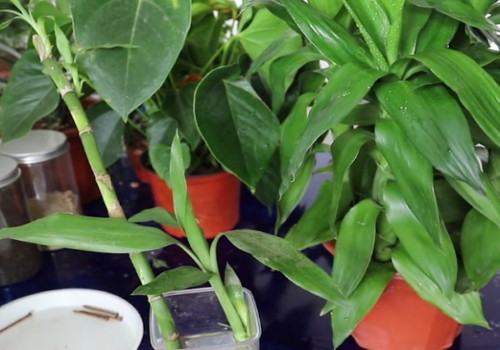
When lucky bamboo develops yellow leaves, it is usually a poor growth phenomenon caused by a lack of iron. Therefore, the common practice is to put a few rusty iron nails into the water of water-cultured lucky bamboo, or to water soil-cultured lucky bamboo with rusty water, so as to supplement the plant with iron and thereby prevent yellow leaves.
However, sometimes yellow leaves on lucky bamboo are not caused by iron-deficiency yellowing, but by root rot, failure to root, poor ventilation, improper light and other reasons. If the plant is given iron when the yellow leaves are not caused by iron deficiency, not only will the yellowing not disappear, it may even worsen.
In fact, as long as we do a good job with the following aspects of care and management in daily life, the plant generally will not develop yellow leaves. Moreover, the plant will grow with lush branches and leaves, a verdant leaf color, glossy green and bright, and greater ornamental value.
1. If it is newly purchased lucky bamboo, originally before it has rooted, for water culture generally keep changing the water every 2-3 days; if signs of rooting have already appeared, then generally we should not change the water too frequently. When the water level drops, simply top up the water, and at the same time add a little willow branch extract to promote rooting.
2. For water-cultured lucky bamboo, generally do not put too many lucky bamboo stalks into each container, because under water culture conditions the nutrients themselves are limited. Putting in too many will disperse the nutrients, and when the plant cannot get sufficient nutrients, yellow leaves often appear, and the plant's growth will also become very slow, making it hard for new leaves to appear.
3. Since the growth of lucky bamboo cannot be separated from nutrients, we should promptly supplement the plant with some nutrition. Generally, monopotassium phosphate can be diluted with water and used on lucky bamboo. This can promote the growth of lucky bamboo, and it is also less likely to develop yellow leaves, with the leaves turning green and shiny.
Of course, we can also use a special nutrient solution for flowering plants. During the growing season, when changing the water, drip a small number of drops of nutrient solution into the water of the water-cultured lucky bamboo to promote rooting and growth. During the peak growing season, a low-concentration diluted solution of monopotassium phosphate can be sprayed on the plant's leaves.