How to Make Lucky Bamboo Root Fastest in Water? Practical Methods Shared
Lucky bamboo is an evergreen plant that is very well suited to being grown in water indoors, but quite a few gardening friends find that after buying one and growing it in water for a while, the plant either fails to root, or roots and then quickly develops root rot, along with yellowing leaves. What is going on here?
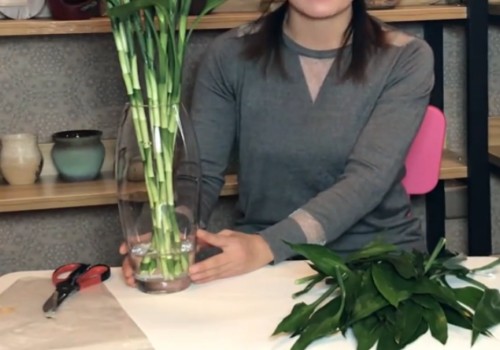
In fact, growing lucky bamboo in water is fairly simple. Usually the above situations occur because we have not grasped its growth habits and have grown it in water blindly. As long as we master the basic cultivation methods, we can often get it to root quickly without root rot or yellow leaves. Below, the editor will share with you how to make newly purchased lucky bamboo root quickly in water without producing yellow leaves.
After buying the lucky bamboo plant, first open the packaging and choose a suitable glass container for water culture according to the size and length of the plant. Generally we choose to use a relatively deep glass container, because lucky bamboo usually grows fairly tall and its stems are fairly long. Moreover, using a glass container for water culture also makes it easy for us to clearly see the rooting of the plant and changes in water quality and water level.
If the lucky bamboo we bought is indeed too tall and too long to be convenient for water culture, we can appropriately cut off part of the main stem from the lower end until it fits in the container we have chosen. However, when trimming the lower end, be sure to use a sterilized sharp knife, and you need to cleanly cut the lower end into a slanted opening.
After cutting the lower end of the main stem of the lucky bamboo into a slanted opening of about 45 degrees, the contact area between the slanted surface and the water can be increased. This is more conducive to the rapid sprouting of new roots, and is also more conducive to the plant absorbing nutrients and water, so the plant's growth results are naturally better.
However, since the lower end of the plant has been cut into a slanted surface, and it also has no root system, in order to reduce the burden on the roots, it is recommended to cut off part of the overly lush leaves on the plant. If yellow leaves are found, they also need to be cut off completely in time. This also helps to a certain extent in promoting rapid root growth, because when there are fewer leaves, the consumption of water and nutrients is also reduced, which naturally lowers the burden on the roots.
Next, pour water into the glass bottle to one third of its volume, then insert the prepared lucky bamboo into it. At the beginning, do not drip nutrient solution into the water, because there is a wound at the base, which easily causes rot. At most, you can soak it in rooting liquid to promote rooting. Also, change the water frequently in the early stage, about once every 3 days. After rooting, changing the water once every 7-10 days is enough.
Normally, the plant should be placed in a ventilated and sunny spot so that it can receive scattered light. When the plant successfully roots and begins to grow leaves, you can drip a few drops of nutrient solution into the water during water changes to increase the nutrients in the water. Since lucky bamboo is fairly shade-tolerant, when the light is too strong, shade it in time or place it in a cool spot so that it can receive scattered light. The above is the fastest method for rooting lucky bamboo in water.