How to grow lucky bamboo in water? Mastering these little tips is enough
Gardeners who love keeping green plants at home certainly won't overlook lucky bamboo. This plant stays evergreen all year round and has extremely high ornamental value, while its auspicious meaning of wealth and good fortune is also one of the reasons it attracts many gardeners. Whether used for ornamental purposes, to accent a space, or to purify indoor air, it can achieve very good results.
Not only that, lucky bamboo is also very suitable for hydroponics at home, which can keep the indoor environment clean. But to grow lucky bamboo well, you need to master certain techniques. Below, the editor will share with you some little tips for growing lucky bamboo in water.
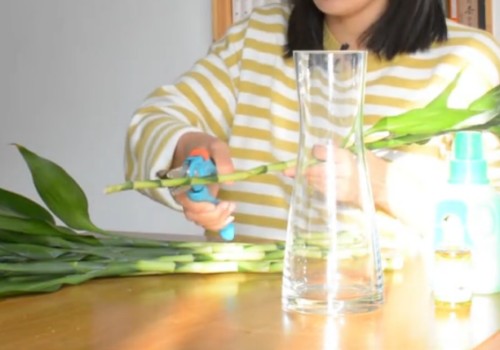
For growing lucky bamboo in water, first we need to find a transparent tall vase, which makes it easier for us to observe the growth of the roots and changes in water quality. Then, according to the size of the vase, cut the lower part of the lucky bamboo's main stem appropriately shorter to facilitate water culture. The amount of water in the container should not be too much; generally, keep the water line at the lower 1/3 of the container.
It should be noted that it is generally recommended to use clean fresh water to grow lucky bamboo, and you should not directly use tap water that has just been drawn. This is because fresh tap water contains substances such as chlorine dissolved in it due to disinfection and sterilization, and using it directly makes it hard to keep lucky bamboo alive. So if you really must use tap water, you also need to prepare it in advance and leave it open so the chlorine in the water can fully evaporate.
When cutting the main stem of lucky bamboo shorter, it is recommended to cut the lower end into a 45° slant, which can increase the contact area between the base and the water, thereby helping the plant absorb nutrients better and root and grow faster. At the same time, if the lucky bamboo has a few yellow leaves, cut them off as well, to avoid them needlessly consuming nutrients and possibly spreading to other healthy leaves.
After filling the container with clean water, simply insert the trimmed lucky bamboo into it. At first, just use clean fresh water to grow it, and do not add nutrient solution too early, otherwise it easily causes the base to rot. Also, in the early stage, generally change the clean water once every 2-3 days; after a period of time when roots have formed, then keep changing the water once every 5-7 days, and when changing the water you can add a few drops of nutrient solution. When the plant's root system has grown fairly large and many leaves have grown, you can keep changing the water once every 10-15 days.
It should be noted that if the lower end of the plant's main stem has leaves that are easily submerged in water, cut them off promptly. This is because leaves submerged in water are prone to rotting, which spoils the water quality and produces bacteria or pathogens, causing the plant's roots to rot as well, and ultimately leading to failure in water culture.
But to promote rooting in lucky bamboo, it is recommended to apply some rooting agent to the base of the main stem before water propagation, or you can drip a few drops of rooting liquid into the water. However, if you drip in rooting liquid, you need to shake it well with the water promptly so it is fully dispersed in the water.
Lucky bamboo is fairly shade-tolerant, but at the same time it also needs light for photosynthesis, so generally place it in a bright, ventilated, sunny spot indoors, so the plant can fully receive scattered light and thus grow better. If the light is too strong, take shading measures promptly, or move it to a cool place for care.
Some gardeners like to turn on the air conditioner at home. If you place lucky bamboo in an air-conditioned room, be sure not to let it face the air outlet directly; whether cold air or hot air, it is unfavorable to its growth. Moreover, after the air conditioner is turned on, the indoor air often becomes relatively dry, so you should spray water or mist into the space and onto the leaves to keep them moist; otherwise, the leaves of the lucky bamboo will develop dry tips or yellow leaves.
As for whether hydroponic lucky bamboo needs fertilizing, actually it generally does not need fertilizing. At most, you can drip a few drops of special nutrient solution into it when changing the water, which is both safe and clean, very convenient to use, and can also promote the plant's growth to some extent.