How to grow snake plants? These cultivation tips you need to master
Nowadays, as people's material lives continue to be satisfied, more and more people are beginning to pursue spiritual enjoyment, and people's interests and hobbies are becoming increasingly broad. Among them, growing flowers is a good activity that is both fashionable and character-cultivating, and it suits all ages.
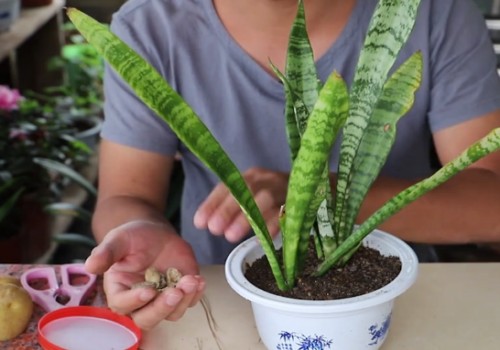
In daily life, there are many kinds of flowers and plants available for people to choose and grow, but when it comes to practicality, the snake plant (Sansevieria) is a good choice and is very suitable as a foliage potted plant for the home. In many previous articles, the editor has also talked about the benefits of growing snake plants.
Snake plants are not only ornamental but can also purify indoor air, and they can also bring people a vigorous, positive and uplifting spirit. But if you want to grow a potted snake plant well, we also need to master certain skills. Today, the editor will share with you the cultivation tips for snake plants.
If you want to grow snake plants well, the choice and preparation of potting soil are very important. Although snake plants are tolerant of poor soil, if we provide them with poor soil, we can often only keep them alive but cannot guarantee they will thrive. To grow snake plants well, it is usually necessary to prepare a fertile, loose, breathable and well-draining sandy soil environment for them.
Because snake plants are drought-tolerant but not water-tolerant, they are very prone to root rot from overwatering, so the permeability of the potting soil must be good. At the same time, the soil must also have enough nutrients to maintain and promote their growth, so it is recommended to use fertile potting soil for growing them.
In summary, it is recommended to use a mixed substrate of leaf mold, sand, vermiculite, coal cinder, etc. to grow snake plants. But if we can find some peanut shells, that would be even better. This is because peanut shells are rich in multiple nutrients needed for snake plant growth, such as nitrogen, phosphorus and potassium.
But note that it is recommended to use raw peanut shells, not salt-boiled peanut shells. During operation, crush the peanut shells and mix them with the potting soil, allowing the peanut shells to fully ferment, so that the nutrients inside can be brought into the potting soil, making it easier for the snake plant to absorb and thereby achieving the purpose of supplementing nutrients.
At the same time, because peanut shells are mixed into the potting soil, after fermentation the potting soil will also become looser and more breathable, which is beneficial for root respiration and also makes it easier for water and fertilizer to penetrate into the potting soil, thus better promoting plant growth. Also, it can largely prevent water accumulation in the pot that causes root rot.
Of course, if you want to grow potted snake plants well, we also need to do a good job in daily care and management of all aspects and links such as light, temperature, water and fertilizer, so as to ensure the snake plant grows vigorously and presents a delightful scene.