What are the care and management methods for jasmine before and after flowering?
Jasmine not only blooms beautifully, but is also very fragrant, and since its leaves stay green all year round, it is simply ideal to grow it as a potted plant. This way we can admire its pure white flowers while also filling the space with fragrance. However, if you want to grow potted jasmine well and make it bloom larger and more abundantly with a richer fragrance, we also need to master the care and management methods for jasmine before and after flowering.
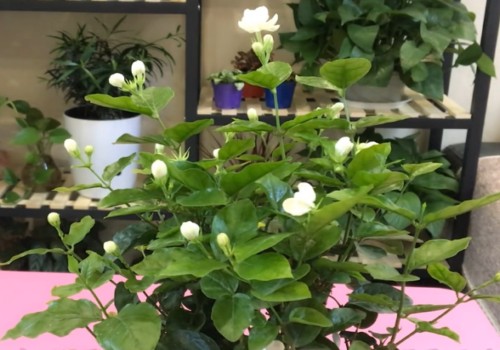
For watering jasmine before flowering, the general principle is this: in spring and autumn, basically keep watering once every 2-3 days so that the potting soil stays moist most of the time and does not become too dry. At the same time, the amount of water must be controlled well, and waterlogging or overly wet potting soil must not occur, otherwise it will inhibit normal root respiration and also easily cause root rot.
Jasmine is an evergreen plant that fears both drought and waterlogging. In summer, when the temperature is too high, the weather is too hot and the light is too strong, in addition to taking necessary shading measures, you should also keep watering once in the morning and once in the evening when the temperature is relatively lower. And because the air may be too dry and transpiration is strong, you should also spray water frequently to maintain moisture and lower the temperature.
Not only that, even when watering, you must grasp the best timing. If you see that the surface of the potting soil has become dry and the plant's leaves show slight wilting, it means the plant is short of water, so water it promptly to avoid dehydration that causes it to wither and die. And watering should be thorough, avoiding the phenomenon of half-watering, otherwise it can likewise easily cause water deficiency and make the plant wither.
At the same time, if the potted plant is placed outdoors and rainy weather occurs, promptly pour out the accumulated water in the pot, and check the drainage effect in the pot to avoid root suffocation, root rot and dry, falling branches and leaves caused by the inability to drain excess water in time. In short, routine water management should be just right, neither lacking water nor excessive.
Besides water management, original pruning work is also very necessary, as it is of great significance for both promoting plant growth and flowering. Moreover, jasmine is relatively tolerant of pruning and also has strong sprouting ability, so when pruning we can also combine it with shaping. This can make the potted plant's shape more beautiful while also making its growth more vigorous, presenting a scene of abundant flowers and green leaves.
If pruning, it is recommended to prune before spring sprouting a range of undesirable branches such as the initially selected old, weak, diseased and disabled branches, damaged branches, dry branches, crossing branches, overly dense branches and so on. This can not only save some nutrients, but also stimulate the plant to sprout, allowing it to produce more new branches and leaves and grow more vigorously. And when the flowering season arrives, there will not only be more flower buds, but the plant shape will also be fuller.
Jasmine's flowering period is very long, and it can bloom multiple times within a year. In order to reduce nutrient consumption and better promote the plant to sprout and restore normal growth, after flowering be sure to promptly remove the spent flowers, and at the same time shorten the flowering branches and leggy branches, so as to ensure that the next round of flowering proceeds smoothly as scheduled. We should not only promptly cut off the spent flowers, but also cut off the flower buds that form too early before the next flowering period arrives.
Not only that, before and after flowering the plant needs to be fertilized to supplement nutrients. The purpose of fertilizing before flowering is to promote flowering, and the purpose of fertilizing after flowering is to promote the plant's rapid recovery and growth. Generally, before and after flowering, you can topdress jasmine once every 7-10 days, with organic liquid fertilizer being most suitable, and be careful to control the concentration and fertilization frequency.
By the time of the second and third rounds of flowering, the fertilization frequency can be increased to once every 3-4 days, because each round of blooming by jasmine consumes a large amount of nutrients. Timely topdressing can not only make the plant grow robust and more vigorous, but also provide support for flowering, making each round of blooming produce large, fragrant flowers.
But it should be noted that after entering autumn, although jasmine also begins preparing for its third round of flowering, after all, the temperature is getting lower and the weather is getting colder, so the plant's consumption of nutrients and water will also decrease. Therefore, after entering winter, water and fertilizer should be appropriately controlled. Because if watering and fertilizing are too abundant in autumn, jasmine will put out more new shoots, and when the temperature is too low in winter, these new shoots are very easily frostbitten.