How to Grow Jasmine? One Article Explains the Care and Management Techniques
Jasmine is an evergreen plant with snow-white flowers, and whenever it blooms, people can often feel its pure beauty. At the same time, when jasmine blooms, it also gives off waves of delicate fragrance, making people feel relaxed and happy, extraordinary and refined, and this elegant beauty of jasmine is also quite loved by cute little girls, making it hard to put down. But if you want to grow jasmine well, you also need to master certain techniques.
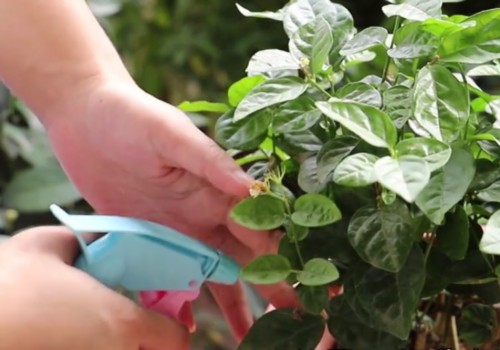
Jasmine is a flowering plant that likes a warm, humid, and well-lit growing environment. In addition to suitable humidity and light, it also requires good ventilation in the care environment. Moreover, this plant is generally rather afraid of cold and not cold-tolerant, and it is also afraid of drought, so if you want to grow jasmine well, the first thing you need to do is provide it with a suitable growing environment.
Although jasmine has a very long flowering period, it can originally bloom 3 times a year, and can even be made to bloom in all four seasons. However, precisely because it likes humidity and fears drought, and likes warmth and fears cold, care and management should be done even better in summer and winter. In summer, the temperature is often high and the weather hot, and water consumption is obvious, so in addition to timely watering, it is also necessary to spray water frequently to cool it down and keep it moist; in winter, because the temperature is low and the plant is not cold-tolerant, it easily enters a dormant state, so you must ensure the ambient temperature is not lower than 12°C for it to bloom.
Light is very important for the growth and flowering of jasmine. If there is insufficient light, the plant is prone to many undesirable growth phenomena such as yellow leaves, leaf drop, leggy growth, no flower buds, no bud formation, and flowers withering prematurely. Generally, the plant needs to be provided with 4-5 hours of light per day. And as long as the light is not especially intense, you can provide full sun, especially in winter. But after it sets flowers, you need to control the light, and generally providing sufficient scattered light is enough; giving too much direct light is instead not good.
Not only that, if we want jasmine to bloom continuously and achieve the goal of extending the flowering period, then after each round of flowering we must prune in time. First cut off the spent flowers, and at the same time shorten the flowering branches and leaves, generally keeping 2-3 nodes is enough. Everyone also need not worry that this will affect later flowering, because jasmine blooms one round after another, all from new flowering branches.
After flowering, in addition to promptly cutting off spent flowers and shortening flowering branches, you also need to cut off old, weak, diseased, damaged, dry, and leggy branches, and if you encounter branches that are growing too densely, you also need to thin them properly, thereby improving the ventilation and light transmission of the potted plant. After the above pruning, unnecessary nutrient consumption can be avoided, allowing the plant to concentrate nutrients more effectively to promote the sprouting of new branches and new buds.
Generally, when a new flowering branch puts out 3-4 pairs of leaves, it will begin to form flower buds and then bloom again. But if the buds form too early, and the number is not large, it is recommended that you remove them, because even if you do not remove them, the flowering effect is often not good, and there may even be only buds and no flowers, and it will also waste a lot of nutrients for nothing.
Jasmine relatively likes fertilizer, especially when it consumes a lot of nutrients during the flowering period, so you should let it store enough nutrients in advance. During the growing period, you can apply fertilizer mainly based on nitrogen fertilizer, while at the bud-forming stage, switch to applying mainly phosphorus and potassium fertilizer; at this time you can apply less nitrogen fertilizer, or even no fertilizer. Also, the fertilizer effect of the chosen fertilizer should not be too strong; it can be an organic nutrient solution with relatively little irritation, applied once a week, and this kind of fertilizer is safer to use.