How to care for jasmine during its flowering period? Getting these few points right is key
Jasmine blooms pure white with a delicate fragrance, and its flowering period is very long, blooming from May all the way to November, which few other flowering plants can match. However, once jasmine enters its blooming season, care and management often require more attentiveness than usual. So how do you care for jasmine during its flowering period?
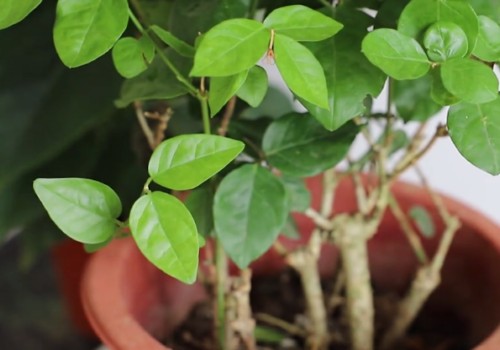
First, we need to talk about the potting soil. Since jasmine prefers a fertile, loose, breathable, well-draining, slightly acidic soil environment, when growing it as a potted plant we cannot simply use garden soil, because garden soil is heavy and sticky and tends to compact, which affects the roots' breathing, hinders the penetration of water and nutrients, lowers the efficiency of water and fertilizer use, and can easily cause root rot.
If for the moment you cannot find good potting soil and have to use garden soil, then loosen the soil around the plant regularly. Also, since garden soil is hard to water thoroughly, it is best to water continuously for more than 1 minute until the potting soil is fully soaked. But generally we use a mixed substrate of leaf mold, vermiculite, sand and so on, which has better permeability and is easier to water thoroughly.
Moreover, jasmine in its flowering period consumes a lot of water, so its water demand is also high; generally, once the potting soil dries out, water it thoroughly right away. Watering during the flowering period is one of the basic guarantees for ensuring the plant blooms, and watering in the morning and evening is recommended. But during the flowering period, be sure not to overwater, otherwise it can easily cause bud drop, loss of flower buds, or even fallen flowers.
Jasmine likes light, especially during bud formation, when light must be ample, but in summer you should also avoid direct sun exposure, otherwise the plant can easily be scorched. Not only that, after bud formation is complete you also need to control the light well; generally during blooming, providing sufficient scattered light is enough. But note that the environment must be kept well ventilated.
Besides light, temperature control is also very important. Since summer temperatures are high and the weather is hot, water transpiration is pronounced, so shade measures should be taken in time, and you should spray water around the plant more often to keep it moist and cool. In midsummer, usually only scattered light is needed, and the temperature is best kept within 28°C. And if you want jasmine to bloom in autumn and winter too, keep the ambient temperature above 12°C.
As for fertilizing, generally apply enough fertilizer before the flowering period. During the growing season, nitrogen fertilizer can be the main one, with phosphorus and potassium fertilizer as a supplement; as the flowering period approaches, phosphorus and potassium fertilizer should be the main one, with little or no nitrogen fertilizer. And if the plant is in its flowering period, fertilizing jasmine is generally not recommended, otherwise improper fertilizing may affect when the plant blooms and prevent flowering from proceeding on schedule.