Detailed Guide to Growing Jasmine in Northern Regions
Jasmine is an evergreen shrub that is deeply loved for its beautiful blooms and fragrant scent. For flowering plants, when care is improper, problems such as yellowing leaves, leaf drop, and bud drop tend to occur, and jasmine is no exception. So, if you want to grow flowering plants well, you must master some techniques, especially in the northern regions of our country.
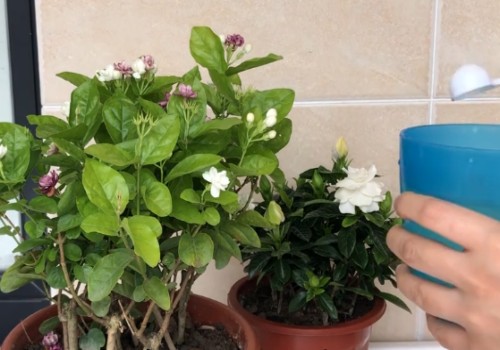
For jasmine, especially potted jasmine, it is prone to yellowing leaves and bud drop. So why does jasmine develop yellow leaves and drop buds? And when this happens, how should we handle it? Today, the editor will chat with everyone about this and provide scientific solutions.
First of all, when growing flowers, we must understand their growth habits and then create a suitable growing environment for them according to their characteristics. The aspects involved in care and management are numerous, such as pot selection, potting soil preparation, light and temperature management, water and fertilizer management, pruning and repotting, and so on, all of which we need to do well.
Jasmine is an evergreen plant that prefers a warm and humid growing environment, with a preference for slightly acidic or acidic conditions. It is also afraid of cold and waterlogging, and avoids concentrated fertilizer. It is more suitable for cultivation in the southern regions of our country. However, if it is moved to the northern regions of our country for cultivation, the difficulty of care tends to increase considerably, especially in winter.
Because the soil in northern regions is generally more saline-alkaline, while jasmine prefers a more acidic soil environment, the two are naturally contradictory. Plants generally find it difficult to adapt to the environment by regulating themselves, so we need to artificially create a suitable growing environment for the plant. If we leave it unattended, then jasmine in northern regions will not only struggle to bloom, but may even struggle to survive.
When growing jasmine in the northern regions of our country, the first problem to solve is the high salinity and alkalinity of the soil. Generally, when growing it as a potted plant, we can pour some diluted ferrous sulfate solution into the potting soil to improve the soil quality, making the potting soil slightly acidic or weakly acidic, which is then more suitable for jasmine growth. But in the winter of northern China, excessively low temperatures are also a huge challenge, so cold protection and warmth preservation in winter must also be done well.
In the winter of the northern regions of our country, temperatures are generally much lower than in the southern regions, and jasmine has poor cold tolerance, so warmth-preserving and cold-protection measures must be taken promptly in winter to ensure the plant can overwinter smoothly without being frostbitten or frozen to death. In the northern regions of our country, it is generally moved indoors or into a greenhouse for care, ensuring the temperature does not fall below 5°C.
But if we place it in the home for care, since households in the northern regions of our country generally have heating or heated kang beds, we must avoid heating vents and stoves. Otherwise, the plant can easily wither and die from severe dehydration. Moreover, winters in the north are dry and cold, with low air humidity, while jasmine prefers a humid growing environment, so we also need to frequently spray water around the plant to maintain moisture. In this way, while ensuring it is not frostbitten, there will also be a suitable humidity environment for growth and survival.
In addition, if jasmine is managed properly, it will not only bloom better and have a stronger fragrance, but also have a longer flowering period. This is because jasmine buds open gradually in successive flushes. In order to help the plant quickly recover growth after flowering and provide assurance for the next round of blooming, post-bloom pruning is generally also needed, along with appropriate watering and fertilizer solution.