How to grow potted jasmine? Care methods and tips
Many gardening friends know jasmine, and are even fairly familiar with it. After all, jasmine is a popular flower in our country, very common, so it is seen quite often. But jasmine is deeply loved by people for its beautiful blooms and overflowing fragrance, and because it can also be scented to make tea.
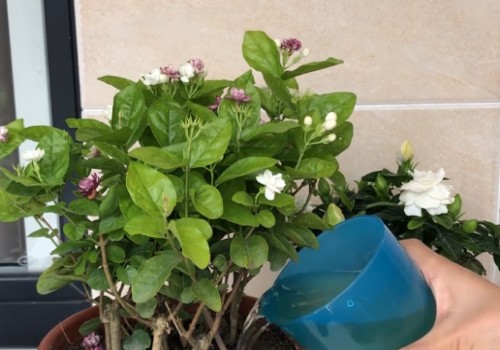
Jasmine is not only nice to look at, but also easy to grow. You only need to master the basic care methods, and it will usually bloom successfully. But in many households, people like to grow it as a potted ornamental, so if you want your potted jasmine to grow well, bloom beautifully and have a strong fragrance, you need to master some care knowledge.
To help everyone grow jasmine well, especially beginners, the editor below will share the care methods for potted jasmine. As long as you master these care tips and precautions, I believe you will certainly be able to grow potted jasmine well.
First of all, jasmine is not very strict about its potting soil; even ordinary garden soil will keep it alive. But when grown as a potted plant, there are certain requirements for the potting soil, mainly to promote its growth, so it grows lush branches and leaves and blooms with fragrant, vivid flowers.
Therefore, the editor recommends using slightly acidic sandy soil rich in organic matter. This kind of soil is loose and breathable, drains well, and is rich in nutrients, making it very suitable for growing jasmine, an acid-loving flower.
As for the pot you choose, besides being attractive, what matters more is ensuring strong breathability, good drainage and enough space. This way, if the jasmine in the pot gets watered too much, the excess water can easily drain out of the pot, while also meeting the jasmine's space needs for growth.
Jasmine is a flowering plant that loves warmth and light. Especially if you want it to bloom well, it requires sufficiently abundant light and a well-ventilated environment. This not only lets the jasmine leaves carry out photosynthesis smoothly and promotes metabolism, but also prevents the plant from developing pests and diseases, providing protection for its vigorous growth.
Jasmine is generally not suited to being kept in a closed, stuffy environment, so the environment should generally be kept well ventilated. But there is one season that is the exception, and that is winter, because jasmine has rather poor cold tolerance and is easily damaged by freezing when winter temperatures are low. Even if it does not suffer freeze damage, the plant easily enters dormancy in a low-temperature environment, so in winter, to keep it warm, you can keep it in a closed, stuffy environment for a short period to ensure it overwinters safely and smoothly.
But if winter temperatures are guaranteed and you can avoid keeping it in a closed, stuffy environment, try to avoid doing so. After all, as long as the jasmine has not entered dormancy and is still growing, a closed, stuffy environment is not suitable. Otherwise, the plant is prone to poor growth, which brings us unnecessary losses and increases the difficulty of care.
Jasmine rather likes a moist growing environment. Not only should the potting soil have a certain humidity, but air humidity is also very important. Therefore, in seasons when water is consumed quickly and the climate is relatively dry, watering must be timely and not excessive, and at the same time you should spray water on the plant more often to raise air humidity, creating a suitable humidity environment for the plant's growth.
Besides timely and adequate watering, fertilizing is also quite important. Especially if you want to promote blooming, increase the number of flowers, improve bloom quality and make the fragrance stronger, phosphorus and potassium fertilizer is indispensable. Generally, potassium dihydrogen phosphate is recommended; dilute it with water in a suitable ratio, stir it thoroughly, then either water it directly at the roots or spray it evenly on the leaf surface. Generally, you can fertilize once every 10 days, and it can be done together with watering.
Jasmine can bloom several times a year. To bloom smoothly in the next flowering period, generally after the previous round of blooming you should prune it promptly and supplement with fertilizer and water. This way the plant can quickly sprout new growth and recover, and at the same time form flower buds earlier, so the second round of blooming opens on schedule.
Of course, care and management methods are not limited to the aspects above. If you want to grow potted jasmine even better and have it bloom on schedule multiple times every year, regular repotting is also very necessary. This not only gives the plant more ample growing space, but also lets it get more nutrients from the new potting soil. The plant will naturally grow even better.