Freesia seedlings not growing after sprouting? This is the right way to care for them
Freesias are generally sown in autumn. To improve the germination rate, it is recommended to pre-sprout the corms before planting. But even after freesias have sprouted, the young shoots may fail to grow after being potted up, and this is mainly directly related to the planting and care methods. So how should freesias be cared for when they do not grow after sprouting?
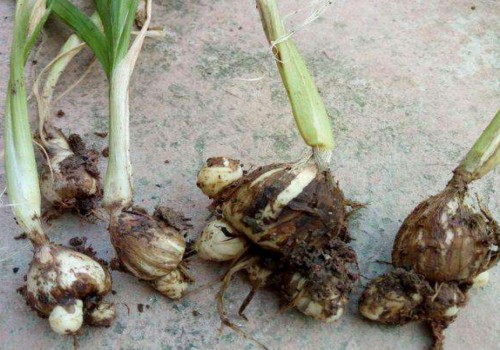
The growth rate of freesia shoots is often closely related to the quality of the corms and the planting depth. Under the same growing conditions, the shallower the corms are buried and the larger the corms are, the faster they generally sprout. If the corms are buried too deep and the corms are small, then their sprouting speed will naturally be much slower.
Therefore, if freesias do not grow after sprouting, you can check whether the soil covering the corms is too thick, or whether the corms are simply too small. Of course, if the corms are wounded and become infected during this period, this will also inhibit the growth of the sprouting points and may even cause the corms to rot and die.
To ensure that freesia corms grow strong and fast, we first need to choose high-quality corms, and then the depth at which they are buried in the soil should not be too deep; generally, covering them with about 10 cm of soil is suitable. If other growing conditions are also met, they will usually sprout within 1 month, and if pre-sprouting was carried out in advance, the sprouting time will be considerably earlier.
When freesia corms have sprouted in the pot, the light must be adequate, but the light intensity must not be too strong; generally, just place the pot in an environment where it can fully receive scattered light or soft direct light. The moisture of the potting soil must also be maintained well, and watering should generally follow the principle of "water thoroughly once the soil is dry." If water is lacking for a long time, the young shoots tend to dehydrate and die; if too much water is given and water accumulates, it easily causes rot.
While the seedlings are kept growing vigorously, nutrients are also indispensable, but the fertilizer concentration must be controlled well. If enough base fertilizer was mixed into the soil when potting up earlier, then the concentration of topdressing should be controlled even more, and it must be sufficiently dilute. Of course, when using base fertilizer, it must be kept away from the corms and not placed too close to the fertilizer, otherwise it can still easily cause fertilizer burn and damage the corms.
After potting up freesia corms, generally you only need to manage temperature, humidity, light, and other aspects well; there is no need to apply large amounts of fertilizer during the seedling stage. If the young shoots do not grow, be sure to promptly identify the cause and then improve the care and management measures, so as to ensure the seedlings grow vigorously.