Detailed Guide to Winter Care Methods for the Gold and Silver Flower
The Gold and Silver Flower (Ardisia crenata) is highly ornamental because of its lustrous red berries, and growing it as a potted plant makes it very attractive to look at. Moreover, it is a Spring Festival flowering plant, widely used during the Chinese New Year period, carrying the beautiful meaning of good fortune and wealth, while also adding to the festive joy. So, how do you care for the Gold and Silver Flower in winter?
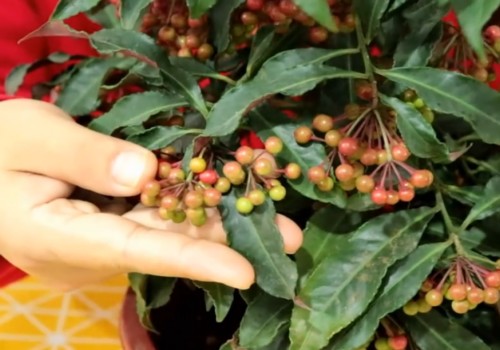
The greatest ornamental feature of the Gold and Silver Flower lies in its berries, but the berries are not bright red as soon as they appear; instead, they gradually turn from an initial green to red. Only after the berries are fully ripe do they present a brilliant red, and only then are they at their most ornamental. Therefore, to grow the Gold and Silver Flower well, we must not only make it bear fruit, but also make its berries turn red.
Once the berries of the Gold and Silver Flower ripen, the whole tree is a mass of red, looking very beautiful. However, to achieve this effect, care and management cannot be neglected. The most important thing among these is to provide temperature protection, because if the temperature is too low, it not only easily causes leaf drop but also makes the berries more likely to fall, thereby reducing the ornamental value. For a berry-watching potted plant, this is undoubtedly something we very much do not want to see.
The Gold and Silver Flower is an evergreen plant. To ensure the plant always maintains a good ornamental effect, in winter it generally needs to be moved indoors for care, especially in the northern regions of our country. The indoor temperature should be controlled at around 10°C. Once it is frosted, the plant's leaves appear somewhat wilted. This is only mild frost damage; generally, as long as it is promptly moved to a warm indoor environment, it recovers easily.
It is currently winter, and the berries of the Gold and Silver Flower are just turning red. In addition to keeping it warm, the frequency of watering also needs to be controlled. Although the Gold and Silver Flower prefers a moist growing environment, after all, water consumption is relatively low in winter, so generally water only after the potting soil has dried out completely. This is because if the potting soil remains moist for a long time in winter, it is likewise prone to causing berry drop. Of course, we can spray water appropriately to increase air humidity.
Moreover, when winter arrives, we should also stop fertilizing in time, since the plant grows slowly in winter, consuming not only less water but also fewer nutrients. Previously we generally applied some slow-release fertilizer, so even in winter, the potting soil still has fertilizer effect remaining. The two most important things to do in winter are to ensure the plant can overwinter safely and to keep the berries stable.
If fertilizer is applied under low-temperature conditions in winter, it is not only unhelpful but may also cause fertilizer damage, burning the roots, and may even trigger a series of problems. Of course, if we have not previously applied slow-release fertilizer, at this stage we can also apply a little, but the amount must be strictly controlled.