How to grow dahlias? Mastering these cultivation tips is key
Dahlia is a perennial flowering plant in the Asteraceae family with tuberous roots, and its underground tuberous root system is also very large, growing abundantly and robustly, just like the sweet potatoes we plant, so in many places it is also called “sweet potato flower.” At the same time, precisely because its underground tubers are large and numerous, they naturally store a lot of water, so it is very afraid of waterlogging.
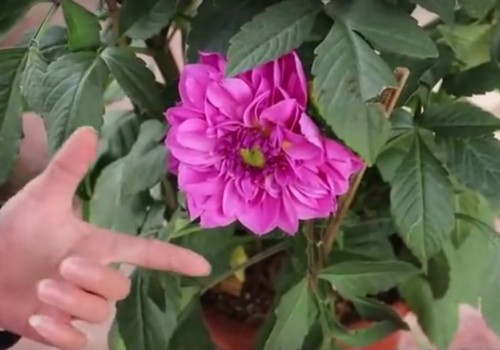
Therefore, when we grow dahlias, the permeability of the potting soil must be strong, and it must be sufficiently loose and breathable, to avoid water accumulating in the pot when watered excessively, otherwise it is easy to rot the fleshy underground tubers of the dahlia. Since the dahlia's tubers are fleshy and store a large amount of water, they are very afraid of being flooded and have the characteristic of being intolerant of water.
If the flower pot you choose is relatively large, the growing medium can be a mixed soil made from perlite, vermiculite, leaf mold, etc. Because such a mixed medium is not only loose and breathable but also has good drainage, even if you occasionally overwater, it will not cause water to accumulate in the pot and lead to root rot. Because the potting soil has strong permeability, it is easy for excess water to drain out of the pot through the drainage hole at the bottom.
In addition, because the dahlia's flowering period is very long, lasting as long as half a year. From May to June each year, it can bloom continuously until November to December, and because its flowers are huge and its stems are relatively long, it is recommended to build a support for it to avoid lodging, which would affect growth, flowering, and ornamental value. Especially in rainy weather, the plant's stems are easily broken by the huge flowers at the top.
Moreover, because the dahlia prefers a semi-shaded growing environment, and summer happens to be its flowering season, reasonably controlling light and providing appropriate shade are beneficial for its growth and flowering. This is because the dahlia is afraid of direct strong light, especially exposure to the scorching sun, and the plant is very prone to problems due to dehydration too quickly. In summer, it is best to place it under the shade of a large tree for care, and at the same time it can also receive some light through the gaps between the large tree's leaves.
For our friends in the southern region, because summers in the south are usually hot and humid, if ventilation conditions are too poor, it is very easy to cause the dahlia's underground tubers to rot. Therefore, summer care especially requires shade and cooling treatment, while also improving ventilation conditions to avoid root rot. This is very helpful for the dahlia to safely get through summer.
If you are growing dahlias in the northern region of our country, the outdoor environment is very suitable for the dahlia's growth and flowering. Therefore, it is generally recommended to place it outdoors for care, and because the northern region is not as humid as the southern region, root rot is not so likely to occur. However, whether growing dahlias in the south or the north, after the flowers fade, the spent flowers should be removed promptly.
Removing spent flowers after blooming and proper pruning are very helpful for extending the dahlia's flowering period and improving the quality of the next round of blooming. Because the dahlia's flowers are huge and bloom brilliantly, the flowering period consumes a great deal of nutrients, and promptly removing spent flowers and properly pruning after blooming can save quite a lot of nutrients, which is very helpful for the plant to recover its vigor afterward.
However, the timing of removing spent flowers must be well controlled, neither too early nor too late. If it is too early, it will shorten our time of enjoying the flowers; if it is too late, too many nutrients may be consumed, which is unfavorable for the subsequent recovery of growth and the next round of blooming. Generally, when most of the flowers begin to wilt, you should promptly pinch off the flowers and remove the spent blooms.
Moreover, when the dahlia produces flower buds, you should also apply fertilizer promptly, since the dahlia consumes too many nutrients during flowering, and the dahlia itself is also a plant that greatly loves fertilizer. Generally, when potting, mix enough organic fertilizer into the potting soil, and then the dahlia can obtain sufficient nutrients throughout the summer. When buds are forming, applying some phosphorus and potassium fertilizer can achieve the effect of promoting flowering and also meet the needs of blooming.