Reasons Why Freesia Grows Long Stems and Thin Leaves Without Blooming and Solutions
Freesia is a plant with very exquisite and lovely flowers, making it highly suitable for growing as a household potted plant. It also emits a pleasant fragrance, filling the whole room with a sweet scent. However, compared to many flowering plants, freesia is also rather delicate, so our routine care and management must not be careless.
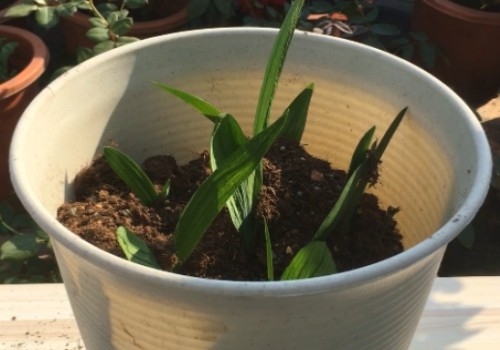
Although freesia blooms with both fragrance and beauty, if the care and management work is not done properly, the plant may develop long stems and thin leaves, which will inevitably affect blooming to a great extent and also make the plant more prone to lodging. So, what should be done when freesia grows long stems and thin leaves without blooming? How can we prevent freesia from growing long stems and thin leaves without blooming?
In fact, as it keeps growing, especially under insufficient light, freesia is quite prone to leggy growth, and this can easily occur starting from the seedling stage. If we do not take timely and scientific measures, it will grow long stems and thin leaves, leading to lodging and failure to bloom. To avoid this situation, first, when the seedlings grow to a height of 8-10 cm, the stems should be pinched or topped.
After pinching or topping, the freesia, having lost its apical growth dominance, will smoothly send out side branches. This also achieves the goal of controlling the plant's height, and its stems and branches will grow thicker and stronger, thereby avoiding leggy growth and lodging. Therefore, pinching or topping freesia starting from the seedling stage is an effective means of preventing it from growing long stems and thin leaves.
But afterward, as the plant continues to grow, some side branches may still grow too long, and there will likewise be a chance of long stems and thin leaves as well as leggy growth and lodging. For this reason, we also need to intervene with a chemical such as chlormequat chloride, a plant growth retardant. Chlormequat chloride, as the name suggests, has the effect of controlling branch growth after application, making the plant grow shorter and sturdier.
However, when using chlormequat chloride, attention must also be paid to controlling both the dosage and the frequency of use, so as to achieve the desired effect. If too little is used, the dwarfing effect may not be achieved; if too much is used, it may severely inhibit the plant's growth and cause it to fail to bloom.