Reasons and solutions for freesia growing only leaves without blooming
Although freesia has beautiful flowers and high ornamental value as a potted plant, it is often susceptible to environmental influences and prone to various poor growth conditions. In particular, its stems and branches tend to be rather thin and weak, making it highly susceptible to leggy growth and lodging. If we encounter the phenomenon of freesia growing only leaves without blooming, what should we do?
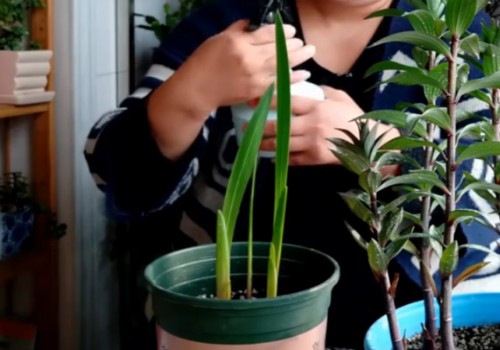
Many gardening enthusiasts like to grow freesia as a household potted plant and place it indoors for care. While this can beautify and accent the home space and is convenient for care and management, it also easily leads to leggy stems and leaves without blooming due to insufficient light.
In this case, the stems generally grow very tall, and even if there is a little blooming at the tips, the entire potted plant presents a lodging state, which not only affects the normal growth of the plant but also affects abundant blooming, inevitably reducing the ornamental value of the potted plant. Therefore, to avoid this situation, it is recommended that when growing freesia indoors, you appropriately use a little chlormequat chloride for flowers and plants.
Chlormequat chloride, as the name suggests, serves the purpose of dwarfing the plant and making its stems grow more robust. In this case, the phenomenon of leggy stems and leaves is naturally avoided, and as long as other growth conditions are met, it can bloom beautiful flowers, very lovely and elegant.
When growing freesia as a potted plant indoors, the original cause is mainly leggy growth due to insufficient light. Because sunlight generally enters the room through glass, both the light-receiving surface and the light intensity are often limited to a certain extent. Therefore, this easily leads to insufficient light. This is true not only for freesia but for most flowering plants; lack of light can cause leggy growth.
In this case, if we cannot adjust the lighting, we can use a little chlormequat chloride for the plant. But when using this chemical, the concentration must be well controlled, otherwise it may cause other problems we cannot predict. Generally, controlling the chlormequat chloride concentration ratio at 0.1% is appropriate, then use a spray bottle to spray the shaken solution evenly on the plant and potting soil.
The effect of chlormequat chloride is very powerful, but it does not produce immediate results; generally it takes effect only after half a month of spraying. Also, the timing of using chlormequat chloride must be grasped well; usually start spraying when the plant grows to about 10 cm, spraying about once every half a month, 2-3 times in succession. After that, the freesia will begin to develop flower buds.
However, this alone is not enough. Because freesia, like lilies, prefers a cool growing environment. When the ambient temperature is maintained between 15°C-25°C, it grows relatively quickly; and when the temperature is maintained at around 15°C, it is more conducive to flower bud differentiation, and it blooms more and is more fragrant and colorful.