How to prevent root rot in Schefflera arboricola? These methods you need to master
Schefflera arboricola is evergreen all year round, with uniquely shaped leaves, and has extremely high ornamental value and greening and beautifying effects. Although Schefflera arboricola is relatively drought-tolerant and also likes a moist growing environment, it is not tolerant of waterlogging. If watered excessively, water accumulation in the pot will inhibit root respiration, thereby causing root rot.
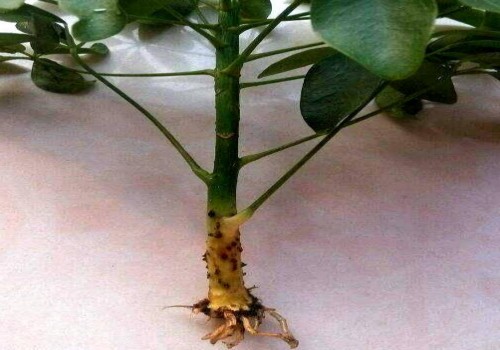
Root rot in potted plants is something many gardening enthusiasts have experienced, and the serious consequence of root rot is that it may lead to the death of the plant. Of course, this is something that the vast majority of potted plant lovers are extremely unwilling to encounter. So, how do you prevent root rot in Schefflera arboricola? Today, the editor will share with you the secret to keeping Schefflera arboricola free from root rot.
In fact, if you want to avoid root rot in Schefflera arboricola, in addition to scientific and reasonable care methods, especially watering, the most important thing is to take necessary protective measures, because sometimes root rot can inevitably be caused by improper watering management. Below, the editor will share three kinds of "materials" that, after being used for Schefflera arboricola, can play a role in never causing root rot.
1. Charcoal
Using charcoal can prevent root rot in Schefflera arboricola, mainly because it has a very strong adsorption capacity. It can not only adsorb bacteria, but also absorb and drain water. Under this dual effect, it can prevent bacterial infection at the roots of Schefflera arboricola, thereby avoiding the phenomenon of root rot.
Moreover, the structure of charcoal itself is also relatively special, and its texture is very loose. Mixing it into the potting soil can improve the looseness of the soil, thereby enhancing the drainage capacity of the potting soil. Once we usually water excessively, the charcoal in the potting soil can not only absorb the excess water, but also cooperate with other substrates to drain water.
2. Coal cinder
It can also be used every day as a substrate for growing Schefflera arboricola, and coal is rich in mineral elements. It can not only promote the growth of the roots of Schefflera arboricola and make the plant's leaves grow more glossy green. At the same time, mixing coal cinder into the potting soil can also improve the loose and breathable effect of the potting soil, making the potting soil more permeable, so that when watering is excessive, it can play a drainage role to a large extent.
3. Peanut shells
Peanut shells themselves are the fruit shells produced by plants. Burying raw peanut shells into the potting soil, after they decompose, can not only release a large amount of organic matter and nitrogen elements, thereby better promoting the growth of Schefflera arboricola, but also improve the soil quality, making the potting soil loose and breathable, and can also improve the drainage effect of the potting soil.
Have you all understood? The above are the three growing materials recommended by the editor. Used together with potting soil, they can improve soil quality and enhance the permeability of the potting soil, thereby avoiding water accumulation and root rot caused by excessive watering, while also providing rich nutrients for the plant.