What Are the Symptoms of Root Rot in Umbrella Tree (Schefflera)?
Umbrella tree, also known as Schefflera, gets its name because its leaves closely resemble duck feet or goose feet, and it is an evergreen shrub very well suited to foliage potted plants. Although the umbrella tree has high ornamental value, many plant enthusiasts still run into situations such as leaf drop and blackened, rotting leaves during actual care. In fact, these phenomena are all signs that the umbrella tree has developed root rot.
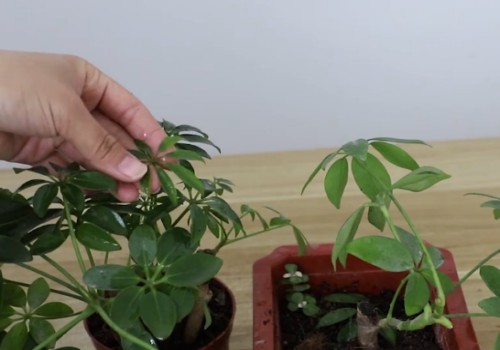
However, before root rot occurs, the umbrella tree generally shows some signals. If we can catch these signals, we can take timely countermeasures and thereby avoid more serious problems caused by root rot. So, what symptoms or warning signs appear before root rot in umbrella tree? Today, the editor will share with you the symptoms of umbrella tree before root rot.
For an umbrella tree whose root system is intact and growing normally, the new leaves at the top of the original plant are usually tender green and look relatively light in color, while the older leaves are mostly dark green. But if the plant is kept in a low-light environment for a long time, the tender leaves may appear somewhat yellowish. In this case, generally increasing the light appropriately will restore the leaf color to normal.
However, if the new leaves of the umbrella tree are very yellow, and the leaves also appear uneven and bumpy, or even somewhat curled. In this situation, even if we adjust the light, we still cannot restore the leaves to normal. And this is exactly a symptom of overwatering that causes water accumulation in the pot.
And this kind of yellowing is usually called water yellowing, mainly caused by the root system being in an oxygen-deficient state after being soaked in water. Especially when nutrients are lacking, not only will the new leaves turn yellow, but the leaves will also become thinner and curl.
The water yellowing of leaves caused by overwatering mostly shows up on new leaves. If we still do not stop watering at this point, over time the color of the entire plant will become dull and lose its emerald green hue. Finally, until the root system of the umbrella tree rots, the leaves turn yellow and fall off.
Therefore, when caring for the umbrella tree, we must pay close attention to changes in leaf color. Once we find water yellowing on the new leaves, we should stop watering in time, because this is mostly caused by overwatering leading to root suffocation. And we should promptly strengthen measures such as ventilation and loosening the soil to speed up the evaporation of water in the pot. As long as the remedial measures we take are timely, we can not only avoid root rot in the umbrella tree, but also let the plant return to a normal growth state before long.
Of course, besides this, a lack of fertilizer may also cause the plant's leaves to turn yellow. However, in the case of fertilizer deficiency, the leaf color of the entire umbrella tree will turn yellow, not limited to the yellowing of new leaves in the water yellowing state. This is essentially different from the leaf yellowing caused by overwatering. Therefore, we can judge whether the umbrella tree is about to develop root rot by observing its leaf color, so as to better carry out remedial and preventive measures.