How to Remedy Root Rot in Daphne Caused by Overwatering
Daphne (Daphne odora) is a flowering plant with very high ornamental value and an especially intense fragrance. Because it is fairly shade-tolerant and prefers a semi-shaded growing environment, many gardening enthusiasts like to grow it as a potted plant indoors to decorate their home or simply to enjoy. However, the roots and stems of daphne are fleshy and do not tolerate water well, so overwatering can easily cause root rot. So how do you remedy root rot in daphne caused by overwatering?
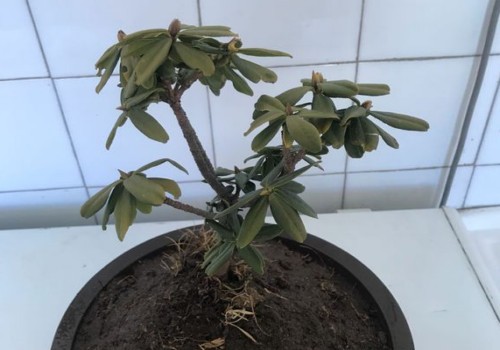
In fact, when caring for daphne in our daily routine, we should already be careful with watering. First, we need to understand clearly that overwatering can easily cause root rot, and then always keep the watering method in mind and follow a scientific approach to watering management so as to avoid root rot. Still, sometimes carelessness on our part may lead to root rot in the plant. Once root rot caused by overwatering is discovered, scientific remedial measures must be taken promptly.
If the root rot in daphne caused by overwatering is not severe, the leaves usually show slight wilting, drooping and yellowing. The most urgent task then is, of course, to drain the water promptly. We must immediately pour out the standing water in the pot, then place the potted plant in a bright, well-ventilated environment to speed up evaporation of moisture in the pot.
If, after pouring out the more obvious standing water in the pot, the potting soil is still very wet and cannot be evaporated in a short time, then we can loosen the potting soil a little and pull out small furrows to speed up evaporation. If that still does not work, then it is advisable to use some relatively dry potting soil to replace part of the wet soil, or even use some highly absorbent substrate to neutralize the moisture level in the pot.
Of course, if the root rot is relatively deep, then the methods above will naturally be very ineffective, and it may even be impossible to save the plant. In such cases, the plant generally shows severe symptoms such as heavy leaf drop and withering. Therefore, in this situation, the editor suggests that it is safer to simply repot the daphne with fresh soil.
But when repotting with fresh soil, you are generally required to take the plant out of its pot, rinse the roots clean, and then trim the roots appropriately, mainly by cutting off the rotten roots. Then soak the roots in a solution such as carbendazim or potassium permanganate to sterilize and disinfect them, because trimming the roots will inevitably leave wounds on the roots. Potting directly would easily lead to infection, which would worsen the damage to the root system, and the plant would not be easy to keep alive after repotting.
If quite a few branches and leaves of the plant have already dried up, it is advisable to prune the branches and leaves appropriately when repotting into a new pot with fresh soil, mainly by cutting off the dried branches and leaves to reduce the plant's own consumption. After all, at this point the root system is damaged and it happens to be repotting time, so the roots have basically lost their ability to absorb. Pruning some branches and leaves appropriately can reduce the burden on the roots and the plant's own consumption, which helps it establish itself in the new pot and survive.
Also, after repotting, do not water for a short period, but you may mist appropriately to maintain humidity; after all, it was overwatering that caused the root rot in the first place. Watering too early after repotting can likewise have an adverse effect on the roots, and at this time the daphne's root system has not yet regained its ability to absorb water. Generally, the potted plant needs to be placed in a cool, ventilated spot to recover for a period, and only when its roots resume growth and the leaves regain vitality should it be given water appropriately.