Why does winter daphne have flower buds but refuse to bloom
Winter daphne (Daphne odora) is deeply loved by the public for its fragrant and gorgeous blooms. Keeping it as a potted plant at home not only provides ornamental value but also releases a rich fragrance that fills the entire living environment. So this flowering plant can be seen in many households and is very practical. Many gardening friends get so overjoyed at the first sight of winter daphne growing flower buds, but after a long time they find that it still refuses to bloom. What is going on?
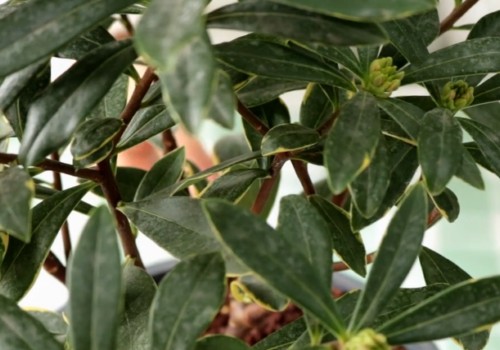
For flowering plants, having buds but being slow to bloom is fairly common. This may be a normal phenomenon, but it may also be an abnormal one. It depends on the specific situation, and we need to investigate and analyze it in depth before drawing a conclusion. Below, the editor will discuss with everyone the reasons why winter daphne has buds but does not bloom!
Take the variegated winter daphne variety among winter daphnes as an example. Since variegated winter daphne begins to bloom around the Spring Festival, if it has buds but is slow to bloom, this may be a normal phenomenon. You only need to carry out care and management in the correct way; when the time comes, it will naturally open its buds. There is no use in just being anxious; we need to calm down and wait.
Potted variegated winter daphne takes a very long time to form flower buds, even reaching several months. First, this is because variegated winter daphne itself takes a relatively long time to form flower buds and let them develop to maturity; second, the time it forms flower buds is in winter, and winter temperatures are relatively low, while its cold tolerance is not very strong either. If the temperature is relatively low, it grows relatively slowly, which will delay the flowering time.
Facts have proven that winter daphne grown indoors in northern China blooms much faster than in southern China. This is because households in northern China generally have indoor heating, and winter daphne is more likely to differentiate flower buds and form buds in a relatively warm environment. So as long as other conditions are met, it generally blooms earlier and more easily than in southern households without heating.
However, winter daphne is generally more suitable for growing in the south, and since it likes a slightly acidic soil environment, it can be said to be a southern flowering plant. But in southern China, during the bud formation period, suitable temperature protection must be provided so as to speed up bud formation and flowering. However, after meeting this condition, proper water control is also needed. Generally, wait until the plant's leaves appear slightly wilted, and water thoroughly only after the potting soil has completely dried out. This can avoid root rot, enhance cold resistance, and promote bud formation, making winter care simpler.
But doing only the above aspects well is not enough. Since winter daphne flowering consumes a large amount of nutrients, we also need to prepare sufficient nutrients for it in advance so that it can bloom more quickly and splendidly. But at this stage, the main focus is generally supplementing phosphorus and potassium fertilizer, after all, it is to promote flowering. Monopotassium phosphate is a very good fertilizer for supplementing phosphorus and potassium elements. When watering is needed, dissolve and dilute it into an aqueous solution to water the plant, and it can also be applied together with watering.
As long as everyone can do a good job in the above aspects of care and management during the bud period of winter daphne, apart from the factor that winter daphne itself takes a relatively long time to form buds and grow flower buds, we will soon be able to see its splendor when it blooms and its refreshing fragrance.