How to care for golden-edged Daphne odora during its blooming period? These methods you need to master
Golden-edged Daphne odora not only has high ornamental value, but also releases a rich fragrance. In addition, it is relatively shade-tolerant and prefers a semi-shaded growing environment with plenty of diffused light, so it is very suitable for growing as a potted plant at home. Moreover, its blooming period is also relatively long, entering the flowering stage from winter, making it very suitable for flower viewing during the Spring Festival.
For a flowering plant like golden-edged Daphne odora, the care and management work during the blooming period must be done well, otherwise it may affect flowering, shorten the blooming period, or reduce the quality of the flowers. Whether for potted plant growers or flower viewers, this is an outcome no one wants to see. Everyone tends to hope even more that golden-edged Daphne odora blooms well, has a long blooming period, and can be enjoyed for a long time. So, how should golden-edged Daphne odora be cared for during its blooming period?
The key to caring for golden-edged Daphne odora during its blooming period lies in managing the bud-forming stage well. When golden-edged Daphne odora begins to form flower buds in large numbers, it is precisely when winter temperatures are relatively low. Because golden-edged Daphne odora has relatively poor cold tolerance, in order to avoid the plant being damaged by frost or having its flowering affected, it is generally necessary to move it indoors in time for care, since indoor temperatures can be effectively maintained.
Although placing golden-edged Daphne odora outdoors allows it to receive better light, which is very beneficial for the plant to form flower buds and promote flowering, it can also cause flowering to be slower and too late due to relatively low temperatures. Even when temperatures are low, it can cause a large number of buds to drop, and especially when suffering frost damage, bud drop becomes even more serious. Therefore, in order to ensure light and temperature, it is recommended to move it indoors and place it in a bright spot near a windowsill for easy access to light.
Indoors, besides ensuring smooth air circulation, the light should also be bright, at least providing sufficient diffused light; the temperature should also be suitable, generally keeping the ambient temperature at around 10°C is most appropriate. In addition, there is the issue of nutrients, because the plant needs to form flower buds, develop buds, and bloom, so its consumption and demand for nutrients are relatively high. Therefore, timely fertilizing is also very important for promoting flowering.
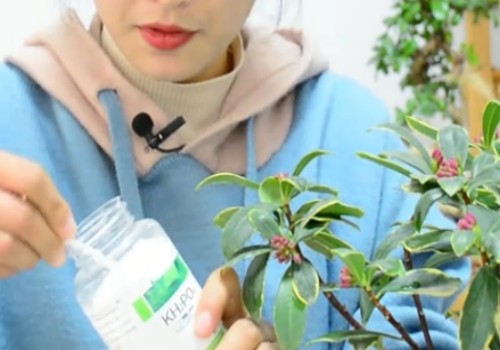
During the bud-forming period, golden-edged Daphne odora must be supplied with sufficient nutrients so that it has enough energy to promote the development and maturation of flower buds. And if we want golden-edged Daphne odora to bloom well, we should apply more phosphorus and potassium fertilizer at this stage. It is recommended to use monopotassium phosphate and dilute it at a ratio of 1:1000 into a solution with a concentration of 0.1%, then spray the whole plant's leaves once or directly water the roots.
As long as everyone does a good job caring for and managing golden-edged Daphne odora during its blooming period in terms of light, temperature, watering and fertilizing, the plant can not only successfully develop mature flower buds, but also avoid bud drop and flower drop, allowing the plant to bloom as scheduled with beautiful and fragrant flowers. At that time, while viewing the leaves and flowers, we can also enjoy the fragrant scent it brings.