Care Methods for Daphne odora 'Aureomarginata' During the Winter Budding Period
Daphne odora 'Aureomarginata' is a very easy-to-grow flowering plant, not only with high ornamental value, but also with a particularly rich fragrance. In addition, it prefers a semi-shaded growing environment, so it is perfect to keep it as a houseplant indoors. It can fill the room with fragrance while we enjoy its flowers, and it can also accent and beautify the home environment.
However, because the fragrance of Daphne odora 'Aureomarginata' is particularly rich, it should not be smelled for long periods, nor should it be placed in relatively small, poorly ventilated environments such as bedrooms. Otherwise, this can not only easily cause dizziness in people, but may also affect the normal growth of the plant. But since Daphne odora 'Aureomarginata' begins budding in winter, in order for it to bloom smoothly as scheduled, we need to pay attention to the care and management work during the budding period. So, how should Daphne odora 'Aureomarginata' be cared for during the winter budding period?
In fact, during normal care and management, you only need to pay special attention to adjusting the light. This is because Daphne odora 'Aureomarginata' prefers a semi-shaded environment with plenty of diffused light and is not tolerant of strong direct light. Otherwise, overly strong light may cause the leaves to wilt and droop, and may even cause scorching or burning.
However, in spring, autumn and winter, we should instead increase light for it. After all, in most cases the light in these three seasons is relatively soft, and appropriately increasing light can better promote its growth and may even improve the quality of flowering. Daphne odora 'Aureomarginata' usually blooms during the Spring Festival period, and the flowering period lasts as long as 2 months. Once the plant enters the budding period, the care and management work becomes especially important.
When Daphne odora 'Aureomarginata' enters the budding period, the plant will basically begin forming flower buds, and this is exactly when it urgently needs nutrients, because if nutrients are sufficient at this time, it will better promote the opening of the flower buds later. And everyone knows that for flowering plants, fertilization during the flowering period should involve applying phosphorus and potassium fertilizers, and potassium dihydrogen phosphate is a very good choice.
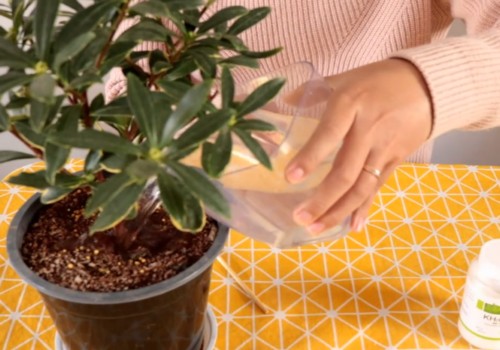
When we use potassium dihydrogen phosphate to fertilize Daphne odora 'Aureomarginata', we generally fully dissolve it in water to prepare a suitable concentration, then spray it on the plant, or it can also be used directly for root watering. Generally, put a small spoonful of potassium dihydrogen phosphate into 1 liter of water, and the concentration of the prepared fertilizer solution is generally 0.1%. This concentration is just right. After fully stirring the fertilizer solution evenly, it can be used directly to water the roots of Daphne odora 'Aureomarginata' or applied as a foliar fertilizer.
For Daphne odora 'Aureomarginata', the key points of care and management during the winter budding period are doing a good job with light and fertilization. Increasing light for it can promote flower bud differentiation, while topdressing can supplement the nutrients needed for flowering. Under the combined effect of light and fertilizer, the plant can obtain enough energy to complete flowering. It can be seen that caring for Daphne odora 'Aureomarginata' during the budding period is very simple.