How to care for Daphne odora after the flowering period? Doing these few things well is key
Daphne odora is a flowering plant that is both beautiful and fragrant. Because of its extremely high ornamental value, it is deeply loved by the public and is usually grown as a household potted plant. But if you want a potted Daphne odora to grow well and bloom with fragrant, gorgeous flowers, care and management work needs to be done well, especially if you want it to quickly recover its growth after flowering and lay a good foundation for blooming next year.
Post-bloom management of Daphne odora is very important. If we want to grow Daphne odora well, post-bloom care should be treated as a key point. So after Daphne odora completes one round of flowering, how should we care for it? That is, how do you care for Daphne odora after the flowering period?
Post-bloom management of Daphne odora is very important. We must not just set it aside and ignore it, because if we manage it well, it will bloom another round the following spring. But after the first round of flowering, we need to strengthen care treatment for the potted plant. So how do you care for Daphne odora after the flowering period?
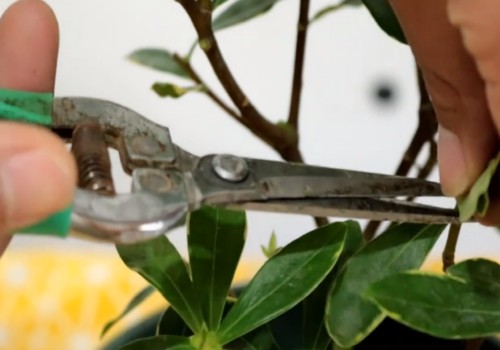
After the Daphne odora flowers fade, we can count down 2 leaves from the base of the flower, then cut off both the spent flowers and the 2 leaves below them. Of course, there may still be some scattered small flowers still blooming on the potted plant. At this time there is no need to keep them either, so they also need to be cut off together, until all the spent flowers and even the flowers still blooming have been cut off.
Post-bloom pruning treatment can save quite a lot of nutrients and allow nutrients to be supplied to the plant in a more concentrated way, which can prompt the plant to quickly recover its growth. After all, the plant consumed quite a lot of nutrients during the flowering period, and its growth is slow and weak, so it urgently needs more nutrients to promote its recovery and send out new side branches. Cutting off spent flowers is an effective means of saving nutrient consumption.
But the nutrients saved by post-bloom pruning alone are not enough to let the plant quickly recover its growth vigor. Timely topdressing is also needed to supplement more sufficient nutrients. So usually after pruning a potted Daphne odora, you can appropriately apply a little compound fertilizer with relatively balanced nitrogen, phosphorus and potassium.
However, the concentration of fertilizer must be controlled well. The amount of fertilizer used must not be too much. You must not apply heavy fertilizer, and even more so must not apply concentrated fertilizer. Usually applying one gram-spoon of fertilizer to a flower pot is enough to achieve the topdressing effect. The fertilizer can also be evenly scattered directly on the surface of the potting soil, then watered thoroughly. In this way, the nutrients in the fertilizer will seep into the soil under the action of watering for the Daphne odora roots to absorb.
After a period of care, especially when the temperature around early March in spring becomes relatively stable, we can apply another round of compound fertilizer for it. Of course, if you want it to bloom in spring, you also need to combine this with topdressing phosphorus and potassium fertilizer, which is more conducive to the flower bud differentiation of Daphne odora, and then lets it bloom smoothly.
After the flowering period of Daphne odora, if we can do a good job with pruning and fertilizer and water management, then when spring comes the following year and flowers bloom, it can still produce a new round of flowers. However, even if we do not aim for spring blooming when caring for Daphne odora, it is still very necessary to prune and fertilize after the flowering period, because this is very important for letting the plant quickly recover its growth vigor.