Why Plum Blossoms Have Buds That Don't Open or Bloom Sparsely, and How to Fix It
Plum blossoms not only bloom brilliantly and fragrantly, but also carry an uplifting quality that fills people with positive energy. However, if a plum blossom only grows buds without opening them, or blooms very sparsely even when it does flower, it is inevitably a sign of poor growth. So what should you do when a plum blossom only has buds that don't open or blooms sparsely?
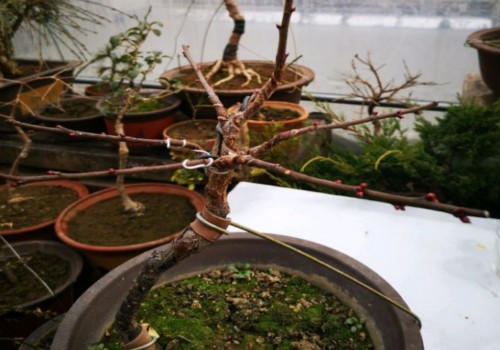
For flowering plants, failure to bloom or sparse blooming not only lowers the ornamental value of a potted plant, but also spoils the mood of anyone enjoying the flowers. Just like a plum blossom that doesn't bloom or blooms sparsely: at first you are delighted and excited to see buds forming, but it is such a shame when they refuse to open for a long time. So today, the editor will explore this issue together with you.
1. Unsuitable environment
If we keep a potted plum blossom for a long time in an environment lacking light, with poor ventilation and dry air, it will inevitably affect the plant's flower bud differentiation. Not only will there be few buds, but even if there are buds, they will be hard to open on schedule. Therefore, the growing environment for plum blossoms requires smooth ventilation, ample light and relatively high air humidity, since it is a sun-loving tree species that also likes moisture. Especially during the flowering period, you must provide sufficient light.
2. Overwatering
Generally, during the flower bud differentiation stage of plum blossoms, you should control water appropriately so the plant can form buds smoothly and grow mature flower buds. If you fail to control water in time and water too much during this period, it will inevitably affect flower bud differentiation and bud formation. Plum blossoms begin flower bud differentiation in summer, and summer is often a season with more rain. If you usually place the pot outdoors, too much rain is like overwatering: it not only easily causes root rot, but is also bad for flower bud differentiation and the growth and development of flower buds, thus affecting flowering.
3. Insufficient nutrients
For a flowering plant like the plum blossom, the flowering period often consumes a lot of nutrients. Not only does the blooming period consume large amounts of nutrients, but the flower bud differentiation stage and the bud stage also need enough nutrients as support. If the potting soil contains relatively few nutrients and pre-flowering topdressing is not done in time, it will inevitably affect flower bud differentiation and the growth and development of flower buds, which naturally affects later flowering. Therefore, it is recommended to focus on nitrogen fertilizer during the flower bud differentiation stage, and focus on phosphorus and potassium fertilizer during bud formation and bud growth, so as to ensure the plant has sufficient nutrients for flowering.
4. Lack of pruning
Pruning plays an important role in promoting the sprouting, growth and even flowering of plum blossoms. Pruning of plum blossoms is usually best done after flowering in spring, and heavy pruning is preferable. This not only saves nutrients but also promotes sprouting, helps the plant regain vigor, and lays a good foundation for flowering the following year. After the plant sprouts new branches, you should also prune and shape it appropriately according to the situation. If our pruning work is not done well, the plant may develop many undesirable branches such as leggy branches and overly dense branches, which not only easily ruin the plant's shape but also affect flower bud formation, and then affect flowering. Therefore, pruning work must also be done carefully.