Osmanthus Care Methods and Precautions Explained in Detail
Osmanthus is highly ornamental, with fragrant blooms and a rich scent that fills the air, making it deeply loved by gardening enthusiasts, who usually grow it as a potted plant at home. But to grow potted osmanthus well, you not only need to master the care and management methods, but also pay attention to certain details. So how do you care for potted osmanthus? What precautions are there? Today, the editor will share with you the care and precautions for osmanthus.
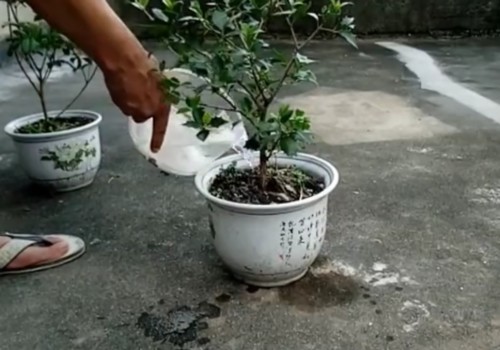
Whether potted osmanthus grows well is closely related not only to the growing environment, but also to the care methods, so we need to manage it from these two major aspects, especially by paying attention to the details, so that we can grow it well. During the care process, we mainly need to do a good job in the following areas. Now let's learn about or get to know them together with the editor!
1. The potting soil must be suitable
When growing flowers and plants in pots, we generally provide them with a fertile, loose soil environment that is breathable and drains well, and there is usually no problem with this point. But there is one detail to note: different flowers and plants have certain requirements for soil acidity and alkalinity. A tree species like osmanthus itself prefers a slightly acidic soil environment, so we need to make the potting soil somewhat acidic.
2. Watering must be appropriate
As for watering, regardless of the method, we first need to choose the water source correctly; the original author generally does not recommend using tap water directly. If it is really for convenience and to save trouble, it also needs to be left to stand for 2-3 days in advance, and used only after the chlorine in the water has evaporated. This way, the plant grows more safely, and it can also delay or prevent the potting soil from becoming compacted or turning alkaline.
If the potting soil we use is unsuitable, the osmanthus will inevitably grow poorly, especially in an alkaline soil environment. Therefore, when watering, we can add a little ferrous sulfate to the water, which can increase the acidity of the potting soil. Of course, we also must not give half-waterings at ordinary times, otherwise the plant's root system will be deprived of water for a long time and suffer drought, and it will also affect the growth of the aboveground part, such as symptoms like yellowing leaves and leaf drop. So watering must also soak through, following the principle of "do not water if not dry; when watering, soak thoroughly."
In addition, we also need to ensure that watering is not excessive and does not cause water accumulation in the pot, otherwise it is easy to inhibit root respiration, leading to root suffocation and, in severe cases, root rot. Of course, after osmanthus develops root rot, undesirable symptoms such as yellow leaves, leaf drop, and withering often appear.
3. Temperature must be adjusted for overwintering
Osmanthus is relatively cold-tolerant, and in many regions of our country, especially in the winter in the south, it can often be kept outdoors. However, winters in northern China often have very low temperatures, and even extreme cold weather may occur, with temperatures possibly dropping to minus dozens of degrees. Osmanthus can generally only withstand low temperatures of -5°C, so if it is kept outdoors, frost damage will still occur. Therefore, when growing osmanthus in pots in northern China, it should be moved indoors in time before winter begins to avoid frost damage.
But indoors, the temperature also needs to be controlled well, neither too low nor too high. If the temperature is still too low, frost damage may still occur; if the temperature is too high, especially above 20°C, it is easy to make the plant sprout leaf buds early, which will affect the growth of branches and leaves and flowering the following year. Usually, the indoor temperature should be controlled at around 10°C, so that neither frost damage will occur nor will the plant sprout early, and the growth and flowering the following year can be guaranteed.