How to grow plum blossoms as a household potted plant and points to note
Since ancient times, plum blossoms have been deeply loved by the public in our country, and their spirit of facing difficulties head-on and remaining unyielding has been praised by many literati and scholars. The plum blossom is a plant with both beautiful and fragrant flowers, and it can be grown both as an ordinary potted plant and trained into a bonsai work. If growing it as a household plant, since most people do not have the exquisite skills of bonsai masters, it can only be grown as an ordinary potted plant. So, how do you grow plum blossoms as a household potted plant?
For household potted-plant growers, keeping plum blossoms alive is generally not a problem. But if we want to grow them well, so that they bloom abundantly and beautifully and are also very fragrant, then the effort we need to put in is much greater, and we also need to master certain methods and techniques. Let's take a look below at how the editor grows plum blossoms well as household potted plants!
1. Reasonable placement
In order to grow plum blossoms well at home, we must choose a placement location that is relatively suitable for their growth. Generally, the chosen location is required to have sufficient light and smooth air circulation, because plum blossoms relatively like light and a good air environment. Therefore, the care environment for potted plum blossoms must be good and must be able to meet their growth conditions, so the location where the potted plum blossoms are placed must be reasonable.
2. Scientific watering
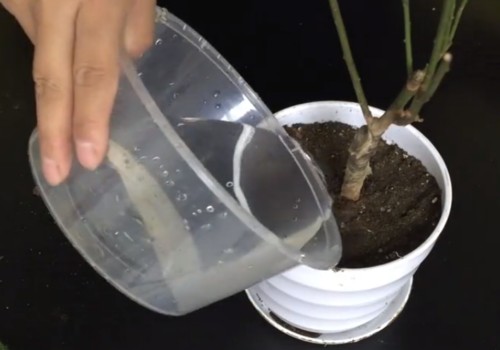
Although plum blossoms consume a relatively large amount of water and have relatively large water needs during the growth period and flowering period, they are also very afraid of waterlogging and have the characteristic of not being tolerant of waterlogging. If water accumulates in the pot, the plant is relatively prone to root rot. Therefore, when we normally water, we must do so in an appropriate amount and not excessively, following the principle of "do not water if the potting soil is not dry; if dry, water thoroughly."
3. Appropriate fertilizing
Plum blossoms relatively like fertilizer. In addition to recommending adding some base fertilizer to the pot when potting, during the original growth period you can also keep applying a dilute fertilizer once every 2 weeks to meet their growth needs; before flowering, you can apply some phosphorus fertilizer to promote the formation and differentiation of flower buds. Since plum blossoms are flowering plants, they will inevitably consume a lot of nutrients during the flowering period, so after flowering you must remember to fertilize in time to prompt the plant to resume growth; you can bury some organic fertilizer in the bottom of the pot.
4. Timely pruning
Pruning of potted plum blossoms is generally carried out after flowering ends each year. Timely pruning can save the plant a lot of nutrients, which is very beneficial for promoting the plant's recovery and growth after flowering. The focus is to shorten old and weak flowering branches, keeping only 2-3 buds on each flowering branch. Moreover, the retained buds should grow outward as much as possible, so as to avoid forming crossing branches later and affecting the beauty of the potted plant's shape. But the targets of plum blossom pruning are not limited to this; adverse branch forms such as old, weak, diseased, and disabled branches, parallel branches, overlapping branches, opposite branches, leggy branches, and overly dense branches should all be pruned.
5. Regular repotting
Plum blossoms in potted form, whether ordinary potted plants or bonsai, generally need to be repotted once after 1-2 years of pot cultivation. But the timing of repotting must be grasped well; it is generally carried out after flowering. However, it is not recommended to replace all the old soil at once, as that will lengthen the plant's time to adapt to the pot. A relatively scientific approach is to replace only 1/3 of the old soil. At the same time, it is also necessary to appropriately prune branches and roots, mainly cutting dead branches and trimming old roots. Then add some new potting soil that is fertile, loose, breathable, and well-draining.