Causes and Control Methods for Yellowing, Withered Leaves with Scorched Edges in Osmanthus
Golden autumn is the season when osmanthus fragrance fills the air, and it is also the best time for us to admire the flowers. But if we care for them improperly, we may see a different scene, such as poor growth conditions like yellowing, withered leaves with scorched edges on the plant, which will inevitably greatly reduce the ornamental value of the potted plant. So, what should we do about yellowing, withered leaves with scorched edges in osmanthus?
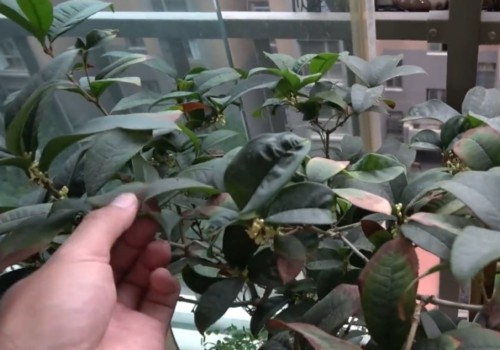
If we want to solve the situation of yellowing, withered leaves with scorched edges in potted osmanthus, we must first find the cause. If it is planted in the ground, it is generally easier to find the cause and solve these problems; generally, it is enough to strengthen fertilizer and water management and do a good job of pest and disease control. But if it is potted, identifying the specific root of the problem is often much more difficult, because there are many factors that can cause yellowing, withered leaves with scorched edges in osmanthus.
But when potted osmanthus shows yellowing, withered leaves with scorched edges, the most common causes are improper watering and a poorly chosen flower pot. If these problems are caused by improper watering during the normal growing season, its leaves are indeed somewhat blunt, but its demand for water is not very great. Therefore, watering should follow the principle of “see dry, see wet; do not water if not dry; water thoroughly when dry”.
If too much watering causes water to accumulate in the pot, it will inevitably inhibit root respiration and cause root rot, so the plant's leaves will turn yellow and withered, and the leaf edges will become dry. But at the same time, watering must not be too little either. If you often water only halfway or do not water for a long time, its roots still will not grow well, which will affect the growth and development of the root system. As a result, the ability to absorb water is not strong, and the plant will develop scorched leaf edges and yellowing due to dehydration.
If the flower pot we use is not well chosen, especially if the material is relatively poor, that is, if air permeability and water permeability are not strong, and at the same time the pot is too deep so that the osmanthus is planted deeply, it may still affect root growth. Although the root system of osmanthus is relatively well developed and it can be planted slightly deeply or shallowly, if an unsuitable flower pot is used and it is planted deeply, the plant is also relatively prone to yellowing, withered leaves with scorched edges.
Therefore, the flower pot we use must be suitable, generally with appropriate depth, and it is best to choose one with a slightly larger diameter, so that its fibrous roots will grow better. Moreover, the plant's absorption of water and nutrients is often mainly achieved through a large number of fibrous roots, so cultivating the fibrous roots of osmanthus is also very important. If the root system is well cultivated, the root system's absorption capacity is improved, and this is combined with scientific watering and other care methods for scientific management, then the plant can be prevented from developing yellowing, withered leaves with scorched edges.