How to care for a Rieger begonia right after bringing it home
The Rieger begonia has a very long flowering period and a rich variety of flower colors, and its blooms are extremely beautiful. With good care and management, it can bloom all year round. If you want a newly purchased potted Rieger begonia to survive transplanting smoothly, grow vigorously, and bloom even better, we need to master certain growing methods and techniques. So how do you care for a newly bought Rieger begonia?
If you plan to buy a Rieger begonia to grow in a pot at home, it is generally not recommended to get one in summer, because summer has high temperatures, hot weather, and strong light. For transplanting a Rieger begonia into a pot, the difficulty is relatively great and the risk is relatively high, and the plant does not easily settle in and survive. It is also very prone to causing a stuffy, enclosed growing condition, which not only easily causes root rot, but also finds the plant itself relatively fragile, which is unfavorable for its growth.
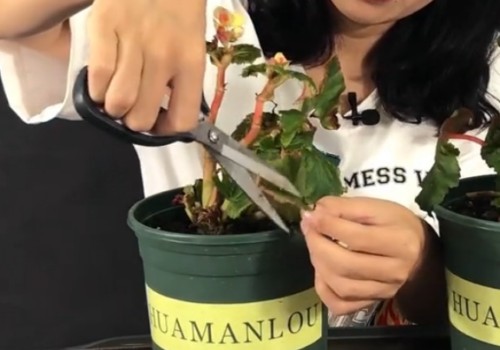
For the Rieger begonia, it is generally suitable to buy seedlings in spring and bring them back for transplanting, and to pot them up after February in spring. After transplanting, you need to promptly do a good job of care and management during the seedling recovery period. Once the plant has survived normally, it will sprout new shoots. At that point, we can cut off and clean up all the dead leaves produced on the plant. But note that the leaves of the Rieger begonia are relatively large; if only one side has dried up, you only need to cut off the dried part, and should not cut off the entire leaf, otherwise it easily weakens photosynthesis and thereby affects the plant's growth.
So why should pruning be done only after the Rieger begonia has survived transplanting? The main reason is that before it has settled in and survived, the plant is very fragile, and pruning too early easily causes harm to it, thereby affecting its ability to settle in and survive. Once it has survived, promptly cutting off the dried parts of the leaves not only prevents them from needlessly consuming nutrients, but also prevents them from spreading or extending to other normal leaves.
If you are growing it indoors in winter, you should raise the indoor temperature a little, since its cold tolerance is not very strong, and it is even rather afraid of the cold. But the Rieger begonia, like flowering plants such as geraniums, is usually very afraid of scorching sun exposure, and its most suitable growing temperature is between 18°C-25°C. During the high-temperature period in summer, if there is insufficient light, it is rather prone to leggy growth, but if it is given too strong light, its leaves are rather easily sunburned. This is because its leaf edges are relatively thin and easily dry out due to light.
If a potted Rieger begonia has put out quite a few new leaves from the nodes, and flowers have already opened at the tips of the branches, we should pay even more attention to controlling the light well. In addition to timely and appropriate shading in summer, you can provide full sun in spring, autumn, and winter, since the sunlight intensity in these three seasons is not strong and generally will not cause scorching. Usually, you only need to place it somewhere it can receive scattered light for care.
From October of the previous year to April of the following year, we should provide it with sufficient light. Even receiving full sun is no problem; on the contrary, under long periods of light that is not strong, the effect of photosynthesis is better, which is often relatively beneficial for both the plant's normal growth and its blooming.
As for watering, generally you just need to water promptly once the potting soil has dried out. But it is also rather afraid of waterlogging. If too much watering causes water to accumulate in the pot or the potting soil to remain too moist for a long time, it is also rather prone to root rot. When watering the Rieger begonia, generally stick to the principle of "do not water if not dry; water thoroughly if dry," so that improper watering will not cause the plant to develop adverse symptoms.