Detailed Explanation of Sago Palm Bonsai Making Methods and Steps
Sago palm is also called iron tree or phoenix-tail banana. Among the common people, the name "iron tree" is used more often for the sago palm. One explanation is that it gets this name because its wood is so dense that it sinks as soon as it enters water, being as heavy as iron; another explanation is that because its growth requires a large amount of iron, even a declining and dying sago palm can be brought back to life and regain its vitality if an iron nail is driven into its trunk, hence the name.
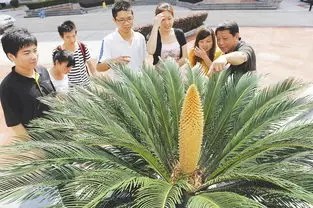
The iron tree mainly grows in Asia and is native to southern China and India. The cultivation and growth of the iron tree favor a warm and humid environment, and it is not tolerant of severe cold, but it is shade-tolerant, with a lifespan of about 200 years. In addition, during the growth process of the iron tree, it is relatively sensitive to iron deficiency, so when cultivating the iron tree, iron filings should be appropriately added to the potting soil.
1. Obtaining materials
Sago palm is usually propagated by sowing, division of suckers, and burying cuttings. The sowing method is suitable for sowing immediately after collection in late autumn, or storing in sand until the following spring before sowing. For open-field sowing in the south, the seedbed soil should preferably be fertile, loose, and well-drained sandy soil. Sow sparsely, cover with fine soil, and under warm and humid conditions, it is easy to germinate. During the seedling stage, attention should be paid to strengthening management. Watering should be moderate, and it should not be too wet, as excessive moisture easily causes root rot. After 2-3 years of cultivation, it can be transplanted. The division method involves cutting off small sprouting suckers from the base of an old sago palm plant for cultivation. If the suckers do not easily produce leaves, a flower pot can be inverted over them to block light and promote leaf growth. After new leaves emerge, remove the covering pot, build a shade frame, and gradually increase light. When cultivating sago palms in the colder regions of the Yangtze River basin, the stems should be wrapped in rice straw in winter for insulation. For ordinary household cultivation without greenhouse conditions, this method should be adopted.
2. Potting
① Choosing a pot: The sago palm is an evergreen foliage tree species, and either a purple clay pottery pot or a glazed pottery pot can be used. Dark purple, light green, or pale yellow colors are preferable. Elliptical or rectangular pots are mostly used, and for a single plant, a relatively shallow round pot or hexagonal pot can also be used.
② Soil: For sago palm potting soil, fertile, loose, well-drained sandy loam that is acidic or slightly acidic is preferable. For household potting, a fertilized potting soil can be used, made of 70% humus soil or weathered pond mud, mixed with 20% sand and 10-20% cake fertilizer.
③ Planting: The sago palm is a warmth-loving plant, and transplanting into pots should be carried out in April in spring. When planting, place a layer of broken tiles and coarse sand at the bottom of the pot to facilitate drainage, then add decomposed cake fertilizer or organic fertilizer as a base fertilizer. If several plants are planted together, the design should be combined when potting, and the planting positions and angles should be set so that size and height are well-varied and orderly.
3. Shaping
When making bonsai from sago palms, the block-like or cylindrical stems cannot be processed for shaping. The key lies in selecting materials, and it is best to use materials with multiple heads, stems lying prostrate and creeping, crisscrossing and slanting, and naturally unusual and strange forms for bonsai decoration. Several sago palm plants of different sizes and heights can also be selected and cleverly arranged in a pot to form a clustered bonsai, which also has a distinctive flavor. Excessively dense large fronds or leaves that affect the appearance can be appropriately pruned and shaped. For sago palm bonsai shaping, slanting or lying horizontally is preferable, and single plants should not be planted upright. When planting two plants together in one pot, choose one large and one small, one upright and one slanting, configuring them to complement each other's momentum. Multiple plants can also be planted in clusters, with variations in primary and secondary status, density, and uprightness and slanting, so that it has a certain ornamental effect.
Sago palms have a certain particularity in cultivation management and bonsai making. If management is improper and making is not refined, it is easy to cause a decline in ornamental value. Therefore, the requirements are relatively high for the daily watering, fertilizing, pest and disease control, heat preservation and freeze prevention, shading, shaping, and repotting of sago palms, as well as for the cultivation of bonsai materials and production.