DIY Bonsai Vegetables: Both Decorative and Practical
Vegetables you bring home that you can't finish, or some that have started to rot, are like chicken ribs - tasteless to eat, yet a pity to throw away. Actually, we might as well find a pretty container and grow them. With a simple transformation, vegetables become attractive potted plants - it's one of life's little pleasures too!
Celery: cheap, good quality, and richly fragrant
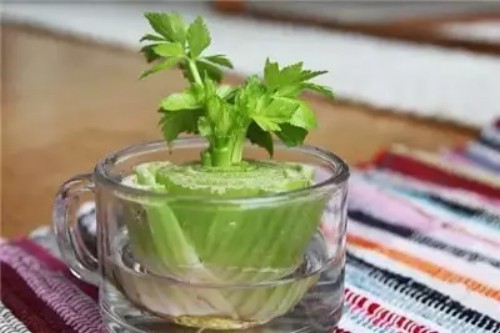
The base of celery is rather tough, and most people throw it away. You just need to cut it off along the base, put it in a dish with water, and place it by a window or somewhere that gets sunlight. Change the water every day, and after about a week or so you'll see the celery take root and send out new shoots.
Taro: shaped like Alocasia
Taro can be grown both as a vegetable and as an ornamental plant. Its form resembles Alocasia and the elephant ear plant (Alocasia macrorrhizos), and placed in the home it is absolutely a beautiful sight.
Asparagus: full of fresh, delicate style
Take a mineral water bottle, preferably a larger one, fill it with water and insert the asparagus. Once the stems and leaves grow out, it has a very sculptural look.
Onion: effective in preventing colds
Cut off the fibrous roots from the top of the onion and place it in a container. Add just a little clear water, and it will soon grow snow-white fibrous roots and quickly sprout.
Sweet potato: elegant, rivaling ivy
Just planted, it looks like this ▲
After it grows up, it becomes like this ▲
Place it in the container with the end that has more buds and a larger head facing up, add a small amount of clear water, and change the water frequently to prevent rot.
Carrot: a touch of fresh greenery in spring
Remember the high school biology experiment "Tissue Culture of Carrots"? The carrot bonsai uses this same principle. Place the cut side of the carrot top facing down, lay it flat in a container, and add a small amount of clear water. Once the carrot greens have grown to a certain point, trim them a little to control the shape, which will make them grow more beautifully.
Bok choy: beautiful even when flowering
Place the base of the napa cabbage flat in a container, add an appropriate amount of clear water, and put it in a sunny spot. Change the water once every 2-5 days, and after a week flower buds will appear - super beautiful!
Ginger: pungent and fragrant, like lucky bamboo
With the ginger buds facing up, secure them with a few small stones. After the ginger leaves grow out, you can switch to growing it in a pot with sandy soil. Before long you can enjoy the fragrant ginger flowers and also harvest quite a bit of tender ginger.
Fennel: elegant, no less than asparagus fern
Fennel can be sown directly from seed, or you can buy fennel plants with roots and plant them. Fennel is a common vegetable; its tender stems and leaves can be eaten, and its fruits can be used as a spice. What's even more remarkable is that the plant is very attractive, no less than asparagus fern (if you're used to its flavor, you can grow it for fun).
Water garlic: the narcissus among vegetables
Water garlic isn't actually a special variety. Simply put, it means growing garlic hydroponically and then planting it in a pot, and depending on the container, training it into different shapes. Compared with narcissus it is in no way inferior, and you can also harvest and eat it, tasting the pollution-free vegetables you grew yourself.