Detailed guide to making Chinese arborvitae (Platycladus orientalis) bonsai, shaping it step by step
Chinese arborvitae (Platycladus orientalis), of the cypress family and the genus Platycladus. It is vigorous and not particular about soil, but grows slowly and lives extremely long; ancient trees over a thousand years old can be seen everywhere. Chinese arborvitae bonsai has high ornamental value; to maintain its graceful posture, you must spray when watering. Rinse the dust and dirt off its leaves, branches and trunk, and the surface of the pot, which helps with light exposure and respiration, giving it youthful vitality and full of life.
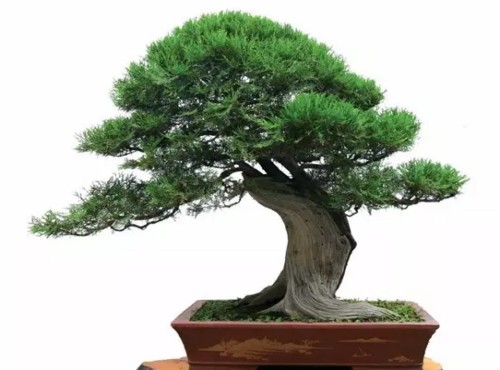
The stock for Chinese arborvitae bonsai is mostly collected from the wild. Choose vigorous stock with beautiful roots and trunk, cut off unwanted branches and old roots, use slightly sandy yellow loam, plant it in a clay pot, water thoroughly the first time; shading is not necessary, but water management must be strengthened. When the pot soil is not dry, pay attention to spraying its branches and leaves to keep them moist.
After planting, the stock needs attention for pest and disease prevention. To prevent viral infection, pay attention to spraying carbendazim, jun du qing, thiophanate-methyl and other chemicals. Because wounded Chinese arborvitae branches and trunks are prone to dieback disease. Before newly planted stock sends out new branches, it is most vulnerable to the striped longhorn beetle. It lays eggs in the old bark layers or in holes and branch forks of the trunk. After the eggs become larvae, they bore into the growth layer of the trunk, gnaw on the growth layer, suck the sap, and kill the stock. Chemicals to control this insect include: dichlorvos, deltamethrin, monocrotophos and others. For larvae that have entered the cambium, the above chemicals can also be used; with a syringe, find the opening of their hole, inject the solution, then seal the opening with mud or dough to kill the insect.
After the Chinese arborvitae stock survives, fertilize it in time. Best is well-rotted liquid fertilizer; compound fertilizer also works. Chinese arborvitae likes plenty of water and fertilizer; only with rational use can it grow well, prompting more bud points and rapid branch growth. Do not prune its branches and leaves in the first year; let it grow naturally for one year. Wait until the second year's peak growing season to prune, keeping the bud points and branches needed for the design and removing the excess, and at the same time do a pruning and adjustment of the roots.
Chinese arborvitae can be shaped in various forms: straight trunk, slanting trunk, curved trunk, cascade and so on are all acceptable. According to the natural conditions of the stock, choose the position of the trunk and its orientation, plant it in a pot, and carry out wiring and pruning to adjust the branch pads. At the first shaping, keep more branches; in the gradual process of forming later, if the branch density is too great, some can be appropriately cut away.
The shaping techniques and methods for Chinese arborvitae bonsai are flexible and varied: trunk chopping and branch growing, wiring and pulling can all be used. The shaped branches should preferably go slightly beyond the ideal position; for example, when pulling down, pull down a bit more than the optimal position, so that when the wiring is removed there is some room for spring-back.
After shaping, the Chinese arborvitae must be carefully maintained. Vigorous water shoots should be controlled and pruned. For leggy leaves, often pinch out the buds by hand; do not use scissors to cut, to avoid producing yellowing spots that affect the ornamental effect. Do not let pull wires or iron wire sink into the branches, to avoid affecting branch growth or even causing death. From a piece of stock to a mature bonsai artwork generally takes at least five years, and the longer the time, the better the ornamental effect.