Detailed explanation of the process for making elm bonsai
Elm, especially old elm stumps that grow in the wild, have gone through many years of human chopping and hacking, or wind and rain erosion, animal gnawing, and so on, gradually forming many different strange postures. Some have gnarled roots and interlacing branches, vigorous and ancient; some turn decay into something magical, with dead roots and new leaves, opening up a world of their own, making them excellent material for making bonsai.
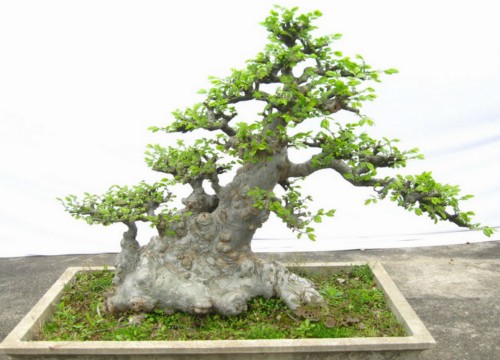
Below is a brief introduction to the steps involved in making elm bonsai:
Newly dug old elm stumps should be planted in plain sandy soil in the ground or in clay pots for "stump cultivation." This is generally done from late autumn to spring (the survival rate is highest in the two or three months before budding). Before planting, the roots and branches must first be pruned, and sticky sap often flows from the cut wounds. If too much liquid seeps out, it will seriously affect the survival rate. You can seal the cuts with paint or wax, or apply a layer of erythromycin ointment or sulfonamide ointment, then sprinkle on fine sandy soil. After planting, pack the soil down as much as possible; there is no need to water, only spray the branches with clean water 1-2 times a day, and after 3-4 days water thoroughly once. After that, do not water unless dry, and strictly forbid waterlogging in the soil.
Next, when styling elm bonsai, based on the basic form of the old stump, wire training, pruning, and so on should be used to create different styles of bonsai such as formal upright, curved trunk, slanting trunk, semi-cascade, cascade, wind-swept, forest, and root-over-rock. Styling can be done during the dormant period after leaf fall, or during the growing period, but avoid the budding period.