A Detailed Guide to Making Ginkgo Tree Stump Bonsai
When people renovate or prune large ginkgo trees, they often saw off many branches and trunks. Those with superior shape can be selected as intermediate rootstock, allowing rapid creation of ginkgo tree stump bonsai. There are three points to note.
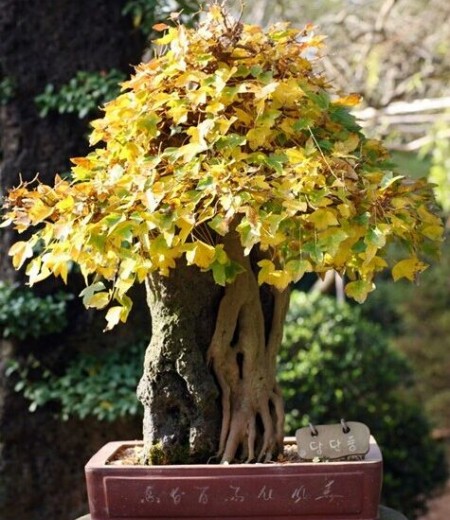
1. The rootstock root system should be well developed. The number of scions to graft depends on the size of the intermediate rootstock; generally three are grafted, forming a “three-legged tripod” arrangement. If the intermediate rootstock is thick or has many branch tips, four to five or more can be grafted.
2. Binding should be firm. To ensure the tissue at the graft union aligns properly, the saw cut on the intermediate rootstock should be smoothed with a sharp blade. Soak it briefly in a rooting hormone solution, then wrap it in several layers of paper that has been soaked in rooting hormone solution and dried. To form callus tissue as quickly as possible, the graft union should be wrapped with thin iron sheet and tightened with wire. The width of the iron sheet is not restricted; the length should be enough to wrap around once without overlapping.
According to different appreciation requirements for ginkgo bonsai, draw a styling design pattern in advance, build the shape according to the stump, and follow the pattern to shape the branches and trunks by bending, binding, and adjusting their curves. Tree stump bonsai strive for a vigorous and rugged majestic appearance; old tree roots and stumps can be used to cultivate a proud, solitary character with thick trunks, curved branches, and exposed roots.
3. Grafting is mostly done using the “bark insertion tongue graft” method. After grafting, plant directly in open ground or in flower pots. It works best during the tree's “bark-slipping” period. If grafting is done in other periods, “cleft grafting” or “whip grafting” can be used, and after grafting, callus in a greenhouse or arched shed with sandy soil. The ideal healing temperature after grafting is 20 to 30 degrees Celsius. After healing, take it out of the sand and plant it in open ground or a flower pot. When removing it, be careful not to damage the callus area or new root points.
The finished ginkgo bonsai should be placed in a sunny, ventilated, and humid place for care. In summer, avoid drought and intense sun exposure; in winter, bury the soil to protect against cold. During the growing season, keep the pot soil moist and apply cake fertilizer or farmyard manure once a week, in small amounts. For the pot soil, choose high-quality nutrient soil as much as possible, and add an appropriate amount of sand and chaff ash. Repot every two years; when repotting, prune excessively long roots, replace half of the old soil, and apply base fertilizer at the bottom of the pot. Ginkgo bonsai grows slowly and has relatively few diseases, so care and management are relatively simple.