Detailed Guide to Making Bonsai from Ginkgo Seedlings
Ginkgo is a deciduous tree in the family Ginkgoaceae and the genus Ginkgo. Ginkgo appeared hundreds of millions of years ago and is the oldest relict plant among the gymnosperms left after the Quaternary glaciation. The ginkgo trees surviving today are rare and scattered, and old trees over a hundred years old are no longer common. All other plants in the same class as it have become extinct, so ginkgo also has the reputation of being a living fossil. Its varieties and cultivars include: yellow-leaf ginkgo, columnar ginkgo, split-leaf ginkgo, weeping ginkgo, variegated ginkgo and others, 26 in total.
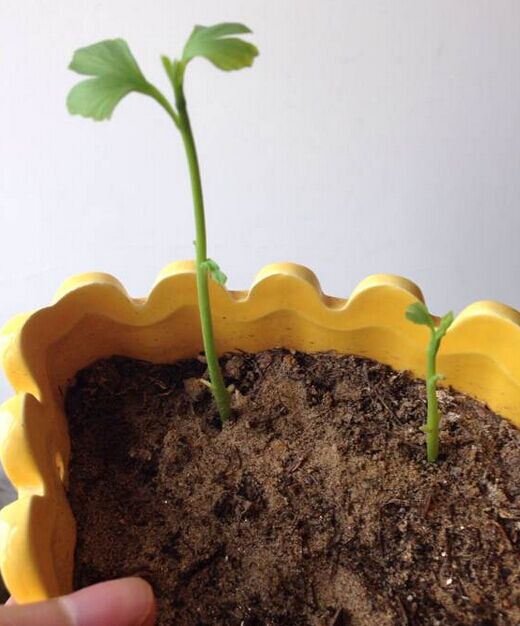
The fruit of the ginkgo tree is commonly known as white fruit, so ginkgo is also called the white fruit tree. The ginkgo tree grows slowly and has an extremely long lifespan. Under natural conditions, it takes more than twenty years from planting to bearing ginkgo fruit, and only after forty years can it produce fruit in large quantities. Therefore, some people also call it the “grandfather-grandson tree”, with the meaning of “the grandfather plants it and the grandson gets to eat”. It is the longevity star among trees and has ornamental, economic and medicinal value.
How to make bonsai from ginkgo seedlings:
Every year from March to April, before the ginkgo leaf buds sprout, choose two- to three-year-old seedlings as raw material and cultivate them using the technique of removing branches to build up the trunk. First cut off the top of the main branch, then use thick wire to insert deeply into the soil downward along the base of the tree, and then wrap it tightly upward against the trunk. According to the tree shape, create a series of bonsai prototypes in different forms such as cascade, slanting, and dragon-coiling.
From July to August, that is, before midsummer, the wire tied in spring can be loosened. After the leaves fall in late autumn, use thin wire to shape and coil the new branches that sprouted that year once more. From March to April of the following year, before the leaf buds sprout, lift it out and pot it with a soil ball for cultivation. Before long, it becomes a ginkgo bonsai with an antique shape and sparse, graceful branches and leaves.