Detailed guide to making a Serissa japonica bonsai, beginners can learn it too
Serissa japonica, also known as Snowbush (Satisfaction). It is an evergreen or semi-evergreen dwarf small shrub of the genus Serissa in the family Rubiaceae. The plant is low, the leaves are dense, the branches are thin and soft, and in midsummer it blooms small white flowers, as if the whole tree is covered in white snow, with high ornamental value. Serissa japonica likes a shady and humid environment and a warm climate. It has low requirements for soil and can grow in neutral and slightly acidic soil. It relatively likes fertilizer and water.
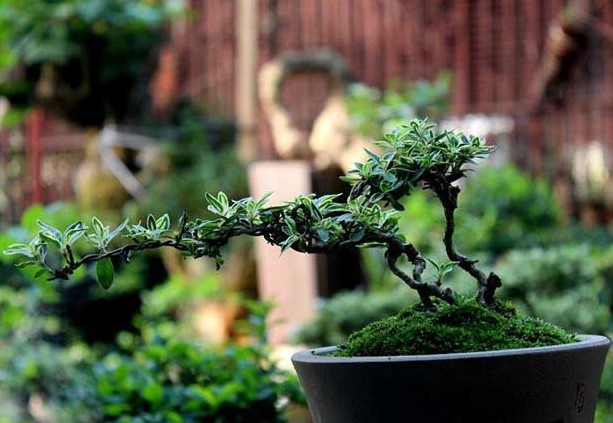
Making a Serissa japonica bonsai roughly needs to go through the following stages: source of stump material, processing and shaping, transplanting and potting, water and fertilizer management, light and temperature requirements, repotting and pruning, and pest and disease control. Below is a detailed introduction to the production process of Serissa japonica bonsai.
2. Processing and shaping: use the "wood-storing trunk-cutting method" for processing, or use the "pruning and binding combined method" for processing. Binding is often carried out from winter when it is semi-deciduous to before spring budding. The main trunk and main branches of Serissa japonica are bound with metal wire, and the small branches are shaped through fine pruning.
3. Transplanting and potting: it is suitable to carry out in February-March, choose a relatively shallow purple clay pot or glazed pot, and the pot color should be slightly darker to form a contrast with the flower color. The potting soil should be sandy loam rich in organic matter, loose and fertile, and with good drainage and air permeability.
4. Light and temperature requirements: during the growing period, Serissa japonica should be placed in a sunny, warm and humid, well-ventilated place. In summer and early autumn, it should be shaded by 50%-70%, and in winter in the north, the room temperature should be kept at 5-12°C.
5. Water and fertilizer management: during the growing season, Serissa japonica bonsai should be watered frequently, and it should not be too dry or too wet for a long time. In summer, spray water on the leaf surface 1-2 times a day; in winter, reduce the frequency of watering and keep the potting soil moist and slightly dry. From April to May each year, apply 2-3 times a 0.5% concentration phosphorus-potassium fertilizer solution; in the twelfth lunar month, apply 1-2 times a thin organic fertilizer solution, and do not fertilize in other seasons. Avoid applying concentrated fertilizer.
6. Repotting and pruning: repot once every 1-2 years, in February-March of spring or during late autumn, remove all old soil, and properly prune the roots. Root raising can be carried out in combination with repotting to form exposed roots and improve ornamental value. Every year after the semi-deciduous period in winter and before budding the following spring, carry out shaping and pruning, shorten long branches and leggy branches, thin out overly dense fine and weak branches, and cut off diseased and pest-infested branches as well as other messy branches that affect the ornamental appearance; during the growing period, timely carry out pinching, bud removal, and branch removal, etc., so that it maintains a beautiful shape.