How to Quickly Make Bonsai Using Grafting Techniques
Making bonsai generally takes at least a few years, or at most decades or even over a hundred years. For the ordinary hobbyist this may not matter, but when we want to turn bonsai into an industry to sustain our livelihood, it may be a myth. More of us hope to enjoy both the beauty and the income when making bonsai, organically combining the two so that we can have both happiness and a living.
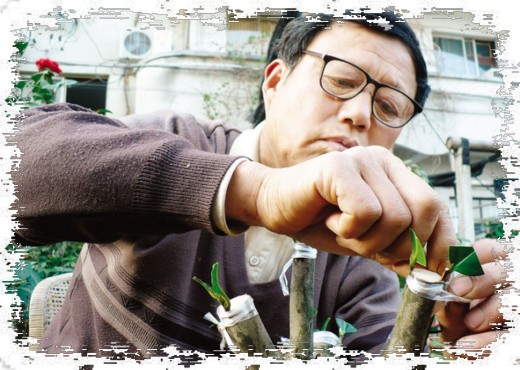
The development of grafting techniques has shown us a path. By adopting appropriate grafting techniques, we can freely give play to our imagination and aesthetic taste, and create bonsai with profound artistic conception and outstanding beauty.
Bonsai making can be divided into the following steps:
First, choose suitable bonsai material
Material is the hardest thing to choose in ordinary bonsai making, but for us the choice is not difficult. As long as it has form, it can be any part of a tree. Whether it has one small branch too many or a few small branches too few, we can simply omit them, and the length can be cut at will according to personal preference.
Second, graft the root system
Because the stump we choose has no roots, we need to graft a root system. The roots are grafted using the inverted side-grafting method, grafting roots at the needed positions. The number of roots is up to you, but do not graft too few just to save effort; grafting roots already saves you much more work than ordinary bonsai making.
Third, graft branches
Graft branches of suitable thickness at the positions where branches are needed. Grafting is suitable for small branches; grafting large branches reduces the likelihood of survival, and besides, our chosen stump no longer lacks large branches. If the small branch is a fruiting mother branch (a branch that first grows shoots and then flowers), the stump can bear fruit in the same year or the next year after it survives.
Fourth, binding
Wrap all the scions and graft unions tightly with plastic strips. Except for the parts buried in soil, the plastic strips must be a single layer at the bud eyes of the scions, otherwise the buds will be smothered to death. The plastic strips should be made from thin food bags; this is the key point, otherwise it will definitely fail, because thin plastic has low toughness and low strength, so the buds can break through naturally.
Fifth, shaping the root system
Shape the root system into the desired form as needed.
Sixth, planting and care
Plant the prepared stump in a flower pot or in the ground. Note that the grafted root areas should be covered with moist soil and then wrapped with plastic film. Before the scions sprout, do not let water reach the grafted root areas when watering; this is also a key point, because if water passes over the graft unions they will rot and the whole planting will fail. When the top scions are relatively strong, gradually remove the excess soil piled around the stump. Finally, remove all the plastic bindings, and the work is initially complete.