Detailed Guide to the Methods and Steps for Making Bamboo Bonsai
Bamboo is elegant and graceful, refined and classic. Used to make small bamboo bonsai to accent a room, it has a very distinctive charm. There are many varieties of bamboo, and for making bamboo bonsai, small bamboos with thin, short culms and narrow little leaves are best, such as Buddha belly bamboo, square bamboo, Guanyin bamboo, black bamboo, and white jade bamboo.
For transplanting bamboo, it is best in spring to select one- or two-year-old, well-developed rhizome-bearing root bamboo, and dig it up with the roots. When transplanting, the roots should retain some native soil, and the main culm should be cut short; for pot cultivation, leaving the culm about 50 cm is best. It is best to first plant it in a small clay pot, and after it survives, plant it in a shallow pot. For bamboo bonsai, humus soil is best. Because the growth of potted bamboo is controlled, the small bamboo shoots put out in spring and autumn are both relatively slender and short, so they are very suitable as material for bamboo bonsai. After planting, water thoroughly once, and place it in a cool, moist, ventilated place to grow for one year; in the second year it can be worked into a small bamboo bonsai.
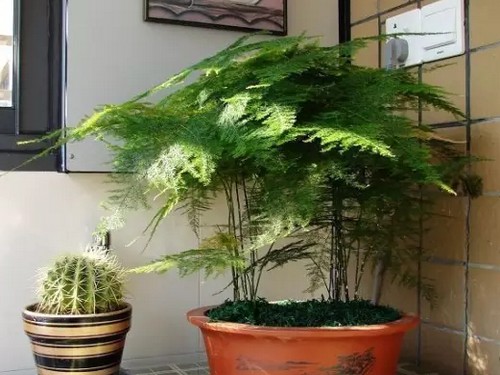
According to the different types of bamboo, different ways of arranging the scene can be used. Small bamboos such as white jade bamboo can be planted in a square or oval pot; medium-sized bamboos such as green bamboo can be planted in a rectangular or oval shallow pot. If planting on one side of the pot feels unbalanced, a beautiful stone of graceful shape and in appropriate proportion to the size of the bamboo can be placed at the other end of the pot, which both achieves balance and adds interest to the bonsai, making it look lively and natural. Large bamboos such as moso bamboo, Henon bamboo, and spotted bamboo, if used to make bonsai, must undergo artificial dwarfing treatment and be planted in medium or small shallow pots to achieve the effect of “shrinking a dragon to a inch”.
Bamboo bonsai should be planted sparsely, not densely; it is better to plant them scattered than crowded. Just three, five, or seven culms, in orderly heights, with proper spacing, in a natural layout, planted in a Yixing shallow pot, with a beautiful stone beside them, a little moss spread around, plus one or two ceramic figures in ancient dress strolling among them, are extremely poetic and picturesque and can be called an excellent bonsai, making the whole bamboo bonsai present a natural bamboo grove scene. Otherwise, it will be messy and disorderly, like a pile of reeds or weeds, with no bonsai charm at all and losing its ornamental value.
To increase the beauty of bamboo bonsai, when potting the bamboo, the roots can be planted higher. After the bamboo has grown and developed for a period, remove part of the surface soil from the roots so that some bamboo roots are exposed above the surface soil, presenting a look of suspended roots and exposed claws, revealing the beauty of the bamboo roots, and it is very pleasing to view.
Bamboo bonsai should be placed in a warm, moist, wind-sheltered, light-transmitting environment, and must not be exposed to the scorching sun in summer. In winter, clumping bamboos are not cold-tolerant, so the pots should be moved indoors to keep warm and prevent cold. Bamboo bonsai should be properly maintained in terms of water and fertilizer. Although bamboo likes fertilizer, in pots it should be applied as little as possible, with only light fertilizer; although bamboo likes moisture, standing water in the pot is taboo. Improper maintenance will cause the bamboo bonsai to become abnormal and grow poorly. During the vigorous growth period of new bamboo in spring and summer, watering should be appropriately reduced, which can dwarf the culms. From May to August each year, apply 2 to 3 times of thin organic fertilizer liquid, and pay attention to providing proper shade during hot summer weather; in this way, the bamboo leaves can be kept fresh and emerald green. Every 2 to 3 years, from March to April, change the soil and repot once, removing some old roots and native soil and replacing them with new growing medium, and it will grow well.
Bamboo sprouts and grows relatively quickly. Usually attention should be paid to pruning to keep the bamboo bonsai graceful in form. From June to July each year, after the new bamboo has finished growing, carry out renewal and shaping pruning. If new shoots appear later, remove them immediately to avoid disrupting the bamboo bonsai's shape and consuming nutrients that affect the mother bamboo's growth. Usually, with just a little careful maintenance to keep it always in a beautiful scene with green, elegant, and attractive branches and leaves, one pot of bamboo bonsai can be viewed for a long time.
Bamboo plants are a special kind of plant. Whether in outward appearance, morphological characteristics, or even cultivation and growth, they are different from others. Bamboo embodies philosophies such as uprightness and open-mindedness, and has always been loved by people. Using bamboo for bonsai, one can appreciate the leaves, the culms, and also its posture. Placed in a room, it has a distinctive wild charm of mountains and forests. The materials for making bamboo bonsai are easy to obtain and the price is relatively low, and the shaping of bamboo bonsai does not require deliberate binding and pruning. Bamboo bonsai should be sparse and upright, not densely planted; it is better scattered than clumped. With orderly heights, planted in a shallow pot, with a fine stone beside it, a little moss spread around, plus 1 to 2 ceramic figures in ancient dress strolling among them, it can be called an excellent work. There are many bamboos suitable for making bonsai, and they can be divided into two major categories: one is clumping bamboos, such as bamboo fern, rice bamboo, Buddha belly bamboo, and green skin bamboo; the other is running bamboos, all large bamboos, such as moso bamboo, Henon bamboo, water bamboo, and spotted bamboo. To use them for bonsai, artificial dwarfing treatment is required before they can be planted in pots. The methods are:
① When the shoot has grown to about 10 cm, use clean tweezers to carefully peel the shoot sheath from the sheath ring. Do not peel at noon when the temperature is high; grasp the principles of peeling more during vigorous growth, peeling less in the early and late periods, peeling weaker shoots more slowly, and peeling promptly because shoots grow fast at night, peeling only 1 to 2 sheath leaves at a time, and so on.
② When the bamboo shoot has grown to about 14 cm, reduce watering to suppress height growth, so that the shoot sends out branches and leaves early, thereby achieving the purpose of dwarfing. For the cultivation of bamboo bonsai, generally in March to April on cloudy days, in a bamboo grove, select one- to two-year-old bamboo with shallow rhizomes and good development as planting stock. When digging, cut it off from the connection between the culm and the base of the old culm, dig it out together with the shoot buds, and take care to damage as few root hairs as possible and bring more soil. Before planting, pruning should be carried out. If it is a large running bamboo, the culm can be cut off evenly and the shoot buds retained; for small clumping bamboo, more branches should be thinned, and leaves appropriately removed to help it survive. For the potting soil, rotten bamboo leaf soil plus an equal amount of coarse sand is best, or acidic nutrient soil mixed with coarse sand can also be used. Planting should not be deep. After planting, place it in a shady place and keep the environment moist, and it will survive relatively easily. Before final planting, pruning should be carried out according to the number, size, posture, and different layout of the bamboo culms. In the layout, be sure to have clear primary and secondary elements, suitable heights, and proper spacing. For the accompanying stone, peak-shaped stalactite is commonly used, symbolizing bamboo shoots after rain. Taihu stone can also be used. Finally, spread moss and place ornaments, and a beautiful bonsai is successfully made.
Bamboo bonsai should be placed in a warm, moist, wind-sheltered, light-transmitting place. In summer it must not be exposed to the scorching sun. In winter, clumping bamboos are not cold-tolerant and should be brought indoors to overwinter. Running bamboos, however, are cold-tolerant and can overwinter outdoors. Although bamboo bonsai likes moist soil, it must not become waterlogged. During the vigorous growth period of new bamboo in spring and summer, appropriately reduce watering, which can dwarf the culms. From June to July each year, after the new bamboo has finished growing, carry out renewal and shaping pruning. From May to August each year, apply 2-3 times of thin, fully decomposed soybean cake fertilizer liquid, and pay attention to summer maintenance. Every 2 to 3 years, from March to April, repot once, removing some old roots and native soil. In daily care, also pay attention to pruning and shaping.