How to Make a Black Pine Bonsai
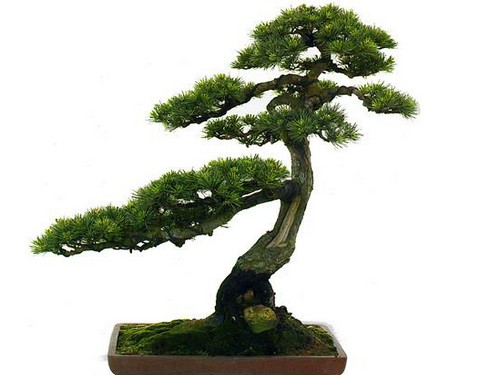
Black pine bonsai has strong adaptability to the environment and can be cultivated in courtyards or on balconies. Its branches spread horizontally, its crown is like an umbrella canopy, its needles are deep green, it stays evergreen through all four seasons, and its tree form is ancient and elegant, making it enjoyable all year round. During the growing period, it is best placed outdoors in a spot with ample sunlight and good air circulation, and it should not be kept indoors for long periods. A black pine stump specimen cultivated for many years, with an old trunk that is vigorous and twisted, and roots that are gnarled and interwoven, displays the wondrous posture of a soaring dragon and the unyielding vitality of life, making it an excellent choice for home ornamental cultivation.
Production time:
According to traditional methods, the production time for black pine is mostly arranged in winter and spring. It is generally believed that this period is the dormancy period of the pine tree, which is beneficial for making black pine bonsai, with a high success rate and little risk of loss or death. As a professional bonsai worker, having only four to six months each year for bonsai production is far from enough. Through decades of observation and understanding of the growth patterns of black pine, the author has found that although winter and spring are the seasons for black pine production, summer is the peak growing season for black pine and is actually the best season of the year for shaping.
You should know that even the best collected stump cannot be perfect in every way. Some tree blanks still need to be adjusted and bent to achieve the ideal composition. Collected black pines are generally rather thick and large, and their greatest characteristic is strong plasticity. After mastering certain techniques, effective tools can be used to bend branches and trunks that cannot be bent by hand. Turnbuckles come in many specifications, large and small, and can be used to pull and bend tree trunks, saving time and effort. What to pay attention to during pulling is that the parts being bent must be effectively protected. Bends with a large angle can be completed in multiple stages, pulling slowly, so as to ensure as much as possible that the branches and bark do not split. Adjusting and bending the main trunk is a key step in the production of collected stumps and is of great importance. If the main trunk is successfully shaped, then the styling is successful; otherwise, it is a failure.
Material selection:
From wild black pine woodlands in mountainous areas, select naturally self-sown, short and sturdy plants, especially small old tree stumps growing out of rock crevices. After collection, first cultivate them in the open ground (raising the blank), and when the root system has developed well and the branches and leaves are growing vigorously, then pot them for processing and shaping. To meet the needs of bonsai production, when cultivating in the open ground, choose a location with ample sunlight and relatively poor soil, and control the supply of water and nutrients so that the main root is thick and short, the lateral roots are well developed, the stem is short and crooked, and the branches and leaves are dense and clustered, with an ancient and elegant posture, making it a good specimen ready for potting and processing.
If the main trunk of the tree stump is relatively thick and large, it may be appropriately cut and processed, and then the retained side branches should be trained and bent into a horizontally extending or drooping form. When selecting and retaining side branches, care should be taken not to keep parallel branches or symmetrical branches; it is best to have layered and staggered arrangement. The shaping and processing of black pine should be carried out during the dormancy period, when the sap flows slowly and pruning branches will not risk pine resin overflowing. During the growing period, only training and bending for shaping, or bud pinching to control growth, may be done; pruning and shaping must not be done.
Trunk shaping:
Black pine bonsai can be made into forms such as slanting trunk style, curved trunk style, and cascade style, and can also be made into root-over-rock style bonsai. Because black pine needles are thick, hard, and relatively long, they are not suitable for pruning and wiring into layered pads; mostly a natural form is used to display the typical characteristics of a pine tree.
The production sequence for black pine should be the main trunk first, then the secondary and tertiary branches. After the main trunk and the secondary and tertiary branches have been adjusted and reach your ideal positions, then proceed to train and bend the small branch pads.
Training and bending of small branch pads:
It is necessary to clearly define the size, distribution trend, and requirements of the small branch pads within the whole tree, and to operate according to standards, with strict arrangement, so as to make the lines smooth. The quality of metal wire training and bending directly reflects the maker's basic skills; it is a key technique in bonsai production. In the process of wiring pads, if too many needles make it inconvenient, the old needles can be removed. The best way to remove them is to cut them off, not pull them off, because pulling them off will also remove the bud points at the needle bases, which is unfavorable for the growth of adventitious buds.
Because summer is the most vigorous growth stage of black pine throughout the year, branches produced during this period will basically set their shape by October. After the shape is set, the aluminum wire must be removed in time, otherwise it will be wrapped by the bark. If it is removed after being wrapped, scars will be left.