Detailed Guide to the Methods and Steps for Making a Vitex Bonsai
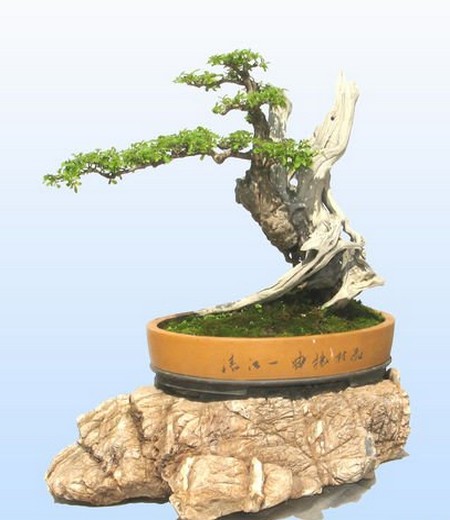
Collecting the stump:
Wild Vitex negundo trees are quite common and easy to obtain. For making bonsai, people generally dig up old stumps with good tree and root shapes from wild hills or buy them on the market. Collecting and digging Vitex negundo is generally done in spring, in March and April. If the original soil around the roots can be kept intact, it can be collected and planted in all three seasons of spring, summer and autumn.
Planting:
Vitex negundo is highly adaptable and not strict about soil. For potting Vitex negundo, loose-textured, well-draining humus soil is best, and the pot should preferably be a clay pot or cement pot. Before planting, cut off damaged roots and overly long roots, and cut off leggy branches and overly dense branches. Vitex negundo has strong adaptability and sprouting ability, and can be planted at any time and in any place. But the most suitable time is still in March of spring. When digging, it is best to take more soil with it and try not to damage the fine roots.
Watering:
Vitex negundo is drought-tolerant, but after potting it should still be watered in a timely manner. Do not water when the soil is not dry; when watering, water thoroughly. Usually, spray water on the leaves less often, otherwise the leaves will become larger and affect the appearance. After planting, water thoroughly once, and pay attention to shading. Those planted in the ground can have a shade frame built over them. If you want Vitex negundo to expose its roots early, deliberately aim the spout of the watering can at the roots when watering. Over time, and after being washed by rain, the gnarled and twisted old roots will gradually be revealed on the surface of the pot.
Fertilizing:
Vitex negundo is tolerant of poor soil, and applying a diluted liquid fertilizer once each in spring, summer and autumn is enough. Never use too much fertilizer or water, otherwise it will cause excessive growth of branches and leaves and ruin the tree's shape. Before the Vitex negundo stump bonsai has taken shape, fertilizing should be done more frequently. Except on rainy days, apply a diluted, fully decomposed cake fertilizer solution once a week. Never use concentrated fertilizer, which can burn the roots and affect growth. After it has taken shape, fertilizing should be controlled. Generally, apply once each in spring and summer, and once more after autumn begins, so as to avoid excessive fertilizer and water causing leggy growth, disrupting the tree shape and affecting the ornamental value.
Pruning:
Pruning and sawing old stumps requires a cautious attitude. The retention or removal of branches and trunks and the length of sawing and pruning should be carefully observed and considered to determine the best styling posture. Pruning between the trunk and branches, and between branches and branches, should be observed from all sides and carefully assessed. Only when you have a clear plan in mind should you begin pruning.
Because Vitex negundo branches and trunks are thick and hard and not easy to wire, artificial shaping for bending should follow the tree's tendency when pruning. For example, natural old Vitex negundo stumps may be aged and venerable, some may have twisted branches and trunks, and some may have already rotted xylem while the bark is still alive and sending out new green leaves. With such forms, even a slight carelessness in pruning can cause irreparable loss. Therefore, when pruning, one should guide according to the situation and prune carefully based on the tree shape and tree vigor. Saw cuts on the trunk or thick branches should leave branches behind so the transition is natural. Otherwise, the small side branches extending from a thick trunk or branch will lack intermediate transitional layers, and the connection will not look natural.
After the Vitex negundo stump has basically been pruned into shape, it can be planted in the ground or in a large pot for maintenance. After potting, turn the pot once a month, because Vitex negundo has phototropism and the branches and leaves facing the sun grow faster than those facing away, which can otherwise cause an uneven crown.
Leaf removal:
To make the leaves smaller and more attractive, in addition to controlling watering and fertilizing, leaf removal can be carried out in early summer and early autumn. When removing leaves, all the leaves on the tree should be removed. Never remove only part and leave part, as this is unfavorable both for the sprouting of new leaves and for the ornamental effect. After leaf removal, strengthen fertilizer and water management, and new leaves will sprout in about 20 days. The regenerated leaves will be about half the size of the original ones. If you understand the habits of Vitex negundo, you can remove leaves and pinch buds multiple times a year, making the grown leaves small and emerald green, giving a sense of vigor and prosperity when viewed.
Styling:
During the growth process of Vitex negundo, its overly rapid growth must be controlled, and shaping must continue. During the growing season, pay attention to regularly pinching buds and removing excessive new shoots so as not to ruin the original styling. If you need to make up for defects in the original styling, you can appropriately retain buds at the defective areas.
For the styling of branches and trunks, it is best to basically complete it in one go at the beginning, because old branches and trunks are thick and hard, and reshaping them later will make wiring and twisting difficult. For root pruning, thick roots should be shortened. Because after the stump survives, most of the fibrous roots sprout from the cut openings, and if the thick roots are too long they will also affect potting. The length for sawing thick roots should be determined according to tree vigor and tree shape. For example, if the tree is in a slanting-trunk style and will later be planted in a long pot, the thick roots extending to one side can be left a little longer, which can highlight the beauty of a root form with coiled roots and exposed claws when potted later, and also help fix the pot when the stump is potted in the future. The principles for styling a Vitex negundo stump are: pruning as the main method, wiring as a supplement, adapting to the material, guiding according to the situation, and styling in sequence.