How to make a purple-leaf barberry bonsai? Detailed method
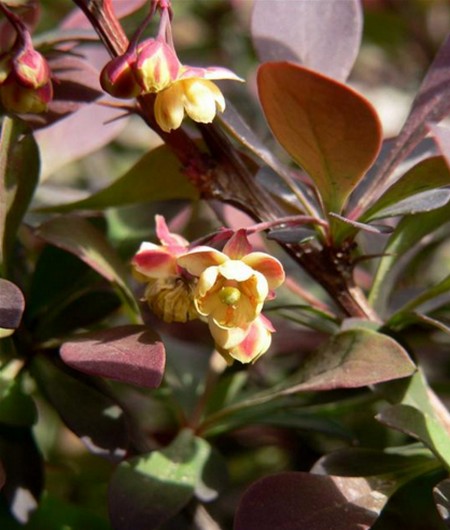
Purple-leaf barberry is an important colored-leaf shrub in landscaping, often combined with golden-leaf privet and big-leaf boxwood to form color blocks, color bands and pattern flower beds. Purple-leaf barberry balls can be planted beside roads or dotted in lawns. In addition, purple-leaf barberry is also a good material for making bonsai. Because it is relatively shade-tolerant, it is a good material for planting under trees and in shaded spots of buildings. It can also be potted and placed indoors or outdoors. Because this species is relatively cold-tolerant, it can be placed in winter in low-temperature places such as entrance halls and corridors, which many greenhouse foliage plants cannot match.
(1) Material collection: Purple-leaf barberry is often propagated by cuttings. Cutting seedlings bear fruit earlier than seedling-grown plants, and the cutting survival rate is high. From February to March each year, before the branches sprout, select robust branches grown in the previous year as cuttings and cut them into 12-16 cm lengths. Before inserting, dip the base briefly in a 500*10ppm naphthalene acetic acid solution, take it out immediately, and insert only after it has dried. After inserting, water once with a fine-nozzle watering can. Roots form about two months after insertion.
Fast-growing cutting seedlings can be transplanted in the same year, with the plum rain season being the most suitable time, but care should be taken to avoid direct sunlight and heavy rain washing.
(2) Potting
① Pot selection: For purple-leaf barberry, a purple clay pot is suitable.
② Soil: The growing soil should preferably be well-drained neutral sandy soil, or alternatively 4 parts aged pond mud, 4 parts garden soil and 2 parts honeycomb coal ash mixed together.
(3) Styling: Purple-leaf barberry is suitable for small or miniature bonsai. Design according to the material; trunk styling is mainly upright style or slanting style, or a forest style can be made. Purple-leaf barberry branches are soft and very easy to shape; it has strong sprouting ability and tolerates pruning, so shaping can be carried out by combining pruning and wiring. The trunk and branches are slightly wired, while the side branches should be pruned and shaped.
In order to control the tree shape, buds should be rubbed off, tips pinched and water sprouts cut off at any time, so as to change this tree species' characteristic of lacking a main trunk. Short pruning, fine pruning and final wiring should be carried out during the dormant period after leaf fall or before sprouting, which helps to correctly handle trunk retention or removal, branch cut angle and wiring positions.