How to make a Polygonum multiflorum bonsai? Detailed method and step-by-step explanation
Polygonum multiflorum can be planted in all four seasons and can survive in all four seasons. It is shade-tolerant, water-tolerant, drought-tolerant, and sun-tolerant. It seems to tolerate almost everything…… I have killed a cactus before, but I have never killed a Polygonum multiflorum. Now I am sharing the method for making a Polygonum multiflorum bonsai for reference.
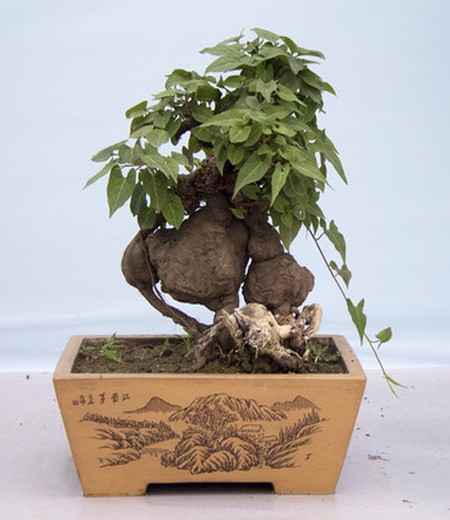
1. Choose soil: use soft, breathable soil, preferably soil and river sand mixed evenly at 1:1. (Although Polygonum multiflorum grows in harsh environments, it is certainly best if it grows vigorously in good soil, right?)
2. Soak the whole Polygonum multiflorum in water. Once it is wet, it can be potted. According to its shape and design, plant the tuber at least 1/3 or more into the soil.
3. Pot it once, water it thoroughly and deeply. Do not be afraid of watering too much! It does not matter.
4. If conditions allow, it is best to bag it, as in my picture. This can promote sprouting and rooting. It also produces more vines. Do not worry about poor ventilation and such; it is actually the same principle as a plastic greenhouse. It retains moisture and heat to promote growth.
5. Place it in a place without wind, without direct sunlight (it is best to put it in sunlight after bagging), and in a shady, humid place. Then wait for sprouting (I put mine in the bathroom; you can refer to that).
Polygonum multiflorum prefers a warm and humid environment, is resistant to cold and barren conditions, and is not strict about soil requirements, but it grows better in loose, breathable, well-drained sandy soil. It is not strict about light conditions. Although plants grown in shady places have lush vines, their leaves are large and thin, which is unfavorable for ornamental purposes. Therefore, during the growing period, it can be kept outdoors in a place with ample sunlight and good air circulation, so that its leaves become small and thick and have higher ornamental value.
For watering, follow the principle of “do not water until dry, and water thoroughly when watering”, and avoid water accumulation in the pot soil to prevent tuber rot. Because it is tolerant of barren conditions, and as a bonsai it does not need to grow too fast, there is no need for additional fertilizing. Polygonum multiflorum has strong sprouting ability and its vines grow quickly. During the growing period, it should be pruned at any time, cutting off vines and leaves that affect the ornamental effect, so as to maintain its sparse, elegant, and graceful shape. Polygonum multiflorum has a certain degree of cold resistance. In winter, it can be kept in a cold room or outdoors in a wind-sheltered, sunny place, with appropriate watering to avoid dry freezing.
For a formed Polygonum multiflorum bonsai, repot once every 1 to 2 years in spring. When repotting, cut off overly long branches and vines, keep only its basic framework, and cut off decayed and rotten roots to encourage new roots to sprout. The pot soil can be mixed with garden soil, sandy soil, furnace slag, and so on.
Note:
It is recommended to put it in sunlight after bagging. This has two advantages: first, sunlight reduces bacterial growth and prevents damage to Polygonum multiflorum; second, it can promote early sprouting and rooting. Generally, in about 2 weeks (at around 20 degrees), vines can emerge.
After that, wait for sprouting. If it has been bagged, once the sprouts grow to about 10 cm, the bag can be removed. Do not rush to take it outdoors. It can be grown completely indoors; it is very shade-tolerant. It is also best to remove the bag on cloudy and rainy days, then gradually expose it to sunlight.
The pot in my picture has been grown for several months and has never seen a trace of sunlight; it was placed in the middle of the living room. But it is still best to give it sunlight regularly. After all, Polygonum multiflorum is naturally sun-loving and shade-tolerant. If it gets sun, the vines will definitely grow much better than this pot of mine.