How to make a Zanthoxylum nitidum bonsai? The method and steps explained all at once
Zanthoxylum nitidum is named because both sides of the leaf midrib bear thorns. It is a traditional Chinese medicinal herb with effects such as clearing heat and detoxifying, commonly known as Liangbeizhen and Rudijinniu, and is an evergreen vine of the Rutaceae family. Because Zanthoxylum nitidum has excellent plant characteristics such as a graceful tree form, evergreen foliage throughout the year, tolerance to transplanting, and ease of survival, in recent years it has often been used by people to make bonsai or potted plants for ornamental viewing.
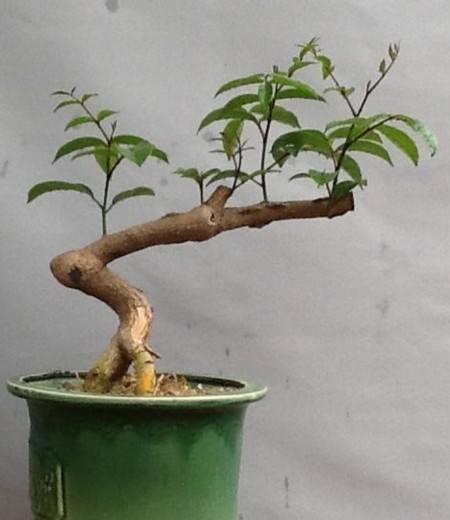
Zanthoxylum nitidum bonsai has excellent characteristics such as a graceful tree form, evergreen foliage throughout the year, tolerance to transplanting, and ease of survival. Below, we introduce the method for making a Zanthoxylum nitidum bonsai.
Zanthoxylum nitidum mostly grows in mountain wilderness and mixed woods in southern China, and is also cultivated artificially. It is mostly propagated by seed, and can also be propagated by cuttings. For bonsai making, old stumps are preferred. Collection and digging should be carried out from March to May. After digging out, dip the roots in a little mud slurry, and wrap them with moss, rice straw, or plastic bags to prevent excessive water evaporation from affecting survival. Zanthoxylum nitidum sprouts easily and tolerates pruning. Before planting newly collected stumps, perform one heavy pruning according to the shaping needs, removing overly dense branches, overlapping branches, and thick downward-growing roots. Except for excessively large stumps, they can generally be potted directly for cultivation.
Zanthoxylum nitidum has a beautiful and changeable form, and is suitable for processing into various bonsai art forms such as cliff style, natural style, and waterside style. The shaping techniques are mainly pruning, supplemented by binding and wiring. Pruning can be done from March to September. For wiring, hanging and binding are mostly used. By pulling and hanging, the main branches and trunk are made to form the rough outline required by the design, and the shape is gradually perfected through pruning.
For Zanthoxylum nitidum bonsai, pots such as Yixing purple clay pots and glazed colored pots are suitable choices. Zanthoxylum nitidum has no strict requirements for soil, but it dislikes saline-alkaline soil and waterlogging. For potted cultivation, loose, breathable, slightly acidic mountain humus soil or vegetable garden soil is suitable. A mix of 50% furnace slag, 10% river sand, and 40% leaf mold can also be used. After the new stump is potted, cover the stump with a transparent plastic bag or film, leaving an air vent of 3 cm to 5 cm, keep the pot soil moist, and place it in a shaded place for care. When most of the new buds have grown to about 5 cm, the cover can be removed on rainy or cloudy days. After October, it can gradually be moved to a place with sufficient sunlight for normal care.