How to Make a Masson Pine Bonsai? Methods and Precautions Explained
Masson pine, also known as mountain pine, is a common tree species, but material suitable for making bonsai is relatively scarce. It is mainly used for construction, railway sleepers, mine props, board making, packing crates, furniture, and wood fiber industry (rayon pulp and papermaking) raw materials. The trunk can be tapped for pine resin, which is a raw material for medicine and chemicals. The roots are rich in resin; the trunk and roots can be used to cultivate poria and mushrooms for traditional Chinese medicine and food, and the bark can be used to extract tannin extract, making it an important tree species for afforestation of barren hills south of the Yangtze River basin.
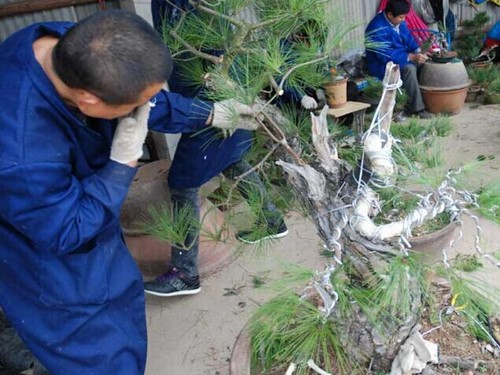
Moreover, it grows slowly and is difficult to make and care for, but its tree form is beautiful and can express many kinds of artistic conception, so it is relatively precious. The key points for making it are as follows:
1. Collecting the stump: Carry this out around the Beginning of Spring before the resin starts flowing, take it with a soil ball and protect the fine roots, seal the root ends and wounds, remove 2/5-1/2 of the branches and foliage, and maintain a balance between roots and branches and foliage.
2. Planting: Use a wide, large soil pot; planting in a wooden box or in the ground is best. Use loose, breathable, clean soil without disinfecting or sterilizing it. When 2/3 of the soil has been mounded, water once for absorption; the next day, mound another one-third with dry soil to absorb moisture, and maintain appropriate dryness and moisture. In the early stage, to prevent prolonged rainy weather, a ring of plastic film can be wrapped around the slightly raised mound of soil, just enough to cover the pot or tree pit. Place it in a wind-sheltered, warm, sunny spot.
3. Management: Provide appropriate shade in the early stage, and give full sun after it survives. Maintain good ventilation. Let the pot soil dry and then water, keeping it slightly dry. Use fertilizer as usual.
4. Shaping: Combine pruning and cutting with wiring and grafting. Pay attention to forcing buds during the growing season and pinching the tops during the budding period.
Precautions:
1. Mountain pine is a full-sun plant, but it must not be exposed to blazing sun in summer. Insufficient sunlight will cause poor growth.
2. Regularly clean up old needles and dead needles, and maintain an appropriate amount of needles to facilitate ventilation and light.
3. Keep the care location relatively fixed, and do not move it frequently.
4. Pruning and grafting wounds must be sealed in time to prevent resin bleeding.
5. Mountain pine is a shallow-rooted tree species, so it should not be planted deeply.
6. Mountain pine has relatively high soil requirements, so it must be treated carefully.
7. When there are no branches or leaves on a mountain pine branch, it is prone to shrinking the node and dying.
8. In the early stage, pay attention to wind shelter and shock prevention, so as to avoid shaking the tree and pulling the roots. Fix small trees with stakes, and fix large trees with supports.