Detailed Guide to the Methods and Steps for Making Pine Bonsai
Among the arts, bonsai is one of the finest examples of Eastern art rich in natural charm, and it is also a unique traditional art of our country. Through artificial techniques, people take trees from nature through cultivation, pruning, wiring, shaping and other processing, carefully nurture them, and then combine this with our artistic methods to truly make them into an elegant, extraordinary, and vividly expressive miniature of nature.
Pine holds a pivotal position among bonsai tree species. It likes light, tolerates dryness, and has strong environmental adaptability. Its needles are deep green, it stays evergreen through all four seasons, and its branches are elegant and antique. After being coiled and shaped, its posture is majestic, lofty and magnificent, with old trunks vigorous and twisted, and roots gnarled and interlocking. In addition, its black, thick bark can express a majestic and bold masculine character. In China there is also the saying, “a thousand-year pine, a ten-thousand-year cypress,” so it also symbolizes festivity, good fortune, and longevity, and the bonsai world has a special affection for it.
Pine is a tall tree species, and its trunk core grows especially vigorously. Its needles are too long. For large bonsai or landscape trees this is still acceptable, but for small and medium bonsai it is not easy to shape and affects the ornamental effect. Sometimes, for the sake of appearance, people cut the pine needles in the middle. This leaves ugly coffee-colored cut marks, and in severe cases resin may ooze out. To solve this problem, Japan adopted the short-needle method very early to control the needles. In the process of caring for black pine bonsai, I learned Japanese techniques and, combined with my own practice, successfully worked out a technique for controlling black pine needles.
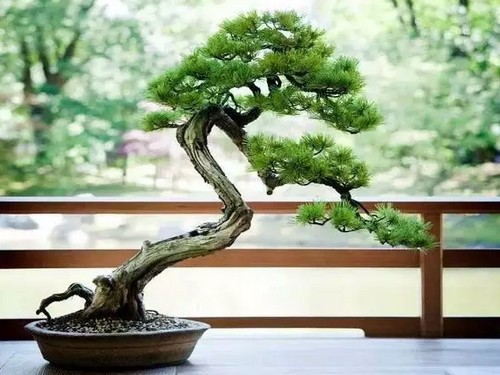
Pine bonsai plays a good role in modern home decoration, and it is also a must-have potted plant for people who love flowers and plants. Ordinary pine bonsai are placed on balconies. Usually trimming the branches a little and admiring the bonsai can let people feel an original, comfortable pastoral life, while also elevating people's spiritual pursuits and allowing them to cultivate their character.
So, how are pine bonsai made?
1. Collecting the stump:
Carry this out around the Beginning of Spring, before the resin begins to move. Bring a soil ball and protect the fibrous roots. The soil ball must not loosen (this is the key to survival). Seal the root ends and wounds, remove two-fifths to one-half of the branches and leaves, and maintain a balance between roots and branches and leaves.
2. Timing for digging mountain pine
It is best to do this during the period from after the Beginning of Spring to the Spring Equinox. The survival rate is highest when dug at this time. For those dug from Awakening of Insects to the Spring Equinox, even if small pines are bare-rooted or the soil has loosened, survival is still relatively easy. When digging mountain pine, bring soil if possible. When digging, first dig a ring around it, then bind it tightly with rubber, and only then cut the main root. After digging, transport it back for planting as soon as possible.
3. Planting:
Use a wide, large soil pot; a wooden box or planting in the ground is best. Use soil that is loose, breathable, and clean; do not disinfect or sterilize it.
When the soil has been filled to two-thirds, water once so it is absorbed. The next day, use dry soil to fill another one-third and absorb moisture, maintaining appropriate dryness and moisture. In the early stage, to prevent long periods of rain, a ring of plastic film can be wrapped around the slightly raised soil mound, just enough to cover the pot or tree hollow. Place it in a wind-sheltered, warm, sunny spot.
Soil use: yellow clay soil, red clay soil, coal cinder; yellow clay soil plus sand or yellow clay soil plus coal cinder can also be used. It is best not to use pure sand. When planting, use a wooden stick to poke the soil firmly, and after planting, water thoroughly to settle the roots.
4. Management:
Provide appropriate shade in the early stage; after it survives, give full sun. Maintain good ventilation. Let the pot soil dry and then become wet, staying slightly dry. Use fertilizer conventionally. Spray water on the leaves frequently every day. After mountain pine survives, place it in a spot with ample sunlight (preferably ten hours), which helps the branches and leaves of mountain pine grow faster and encourages more new roots.
5. Do not believe too much in the saying “dry pine, wet cypress”
During the growing season, as long as drainage is good and the soil is breathable, watering every day does no harm.
6. It is best not to use glazed pots
When planting mountain pine, use a pot a little larger than the soil ball. My mountain pines are basically grown in wooden boxes.
7. Shaping:
Pine bonsai has tenacious vitality and is suitable for all kinds of soil planting. Its own form is relatively good, and with artificial pruning, the shape of pine bonsai becomes even more graceful and charming. In shaping, pruning and cutting should be combined with wiring and grafting. Pay attention to forcing buds during the growing season and pinching the tops during the budding period.
Precautions:
1. Mountain pine is a full-sun plant, but it must not be exposed to scorching sun in summer. Insufficient sunlight will cause poor growth.
2. Regularly clean out old needles and dead needles, and maintain an appropriate needle quantity to facilitate ventilation and light.
3. Keep the maintenance location relatively fixed; do not move it frequently.
4. Pruning and grafting wounds must be sealed promptly to prevent resin flow.
5. Mountain pine is a shallow-rooted tree species and should not be planted deeply.
6. Mountain pine has relatively high soil requirements and must be treated carefully.
7. When there are no branches or leaves on a mountain pine branch, it is prone to node shrinkage and death. In the early stage, pay attention to wind shelter and shock prevention to avoid shaking the tree and pulling the roots. Fix small trees with stakes, and fix large trees with supports.